 Image 1 of 1
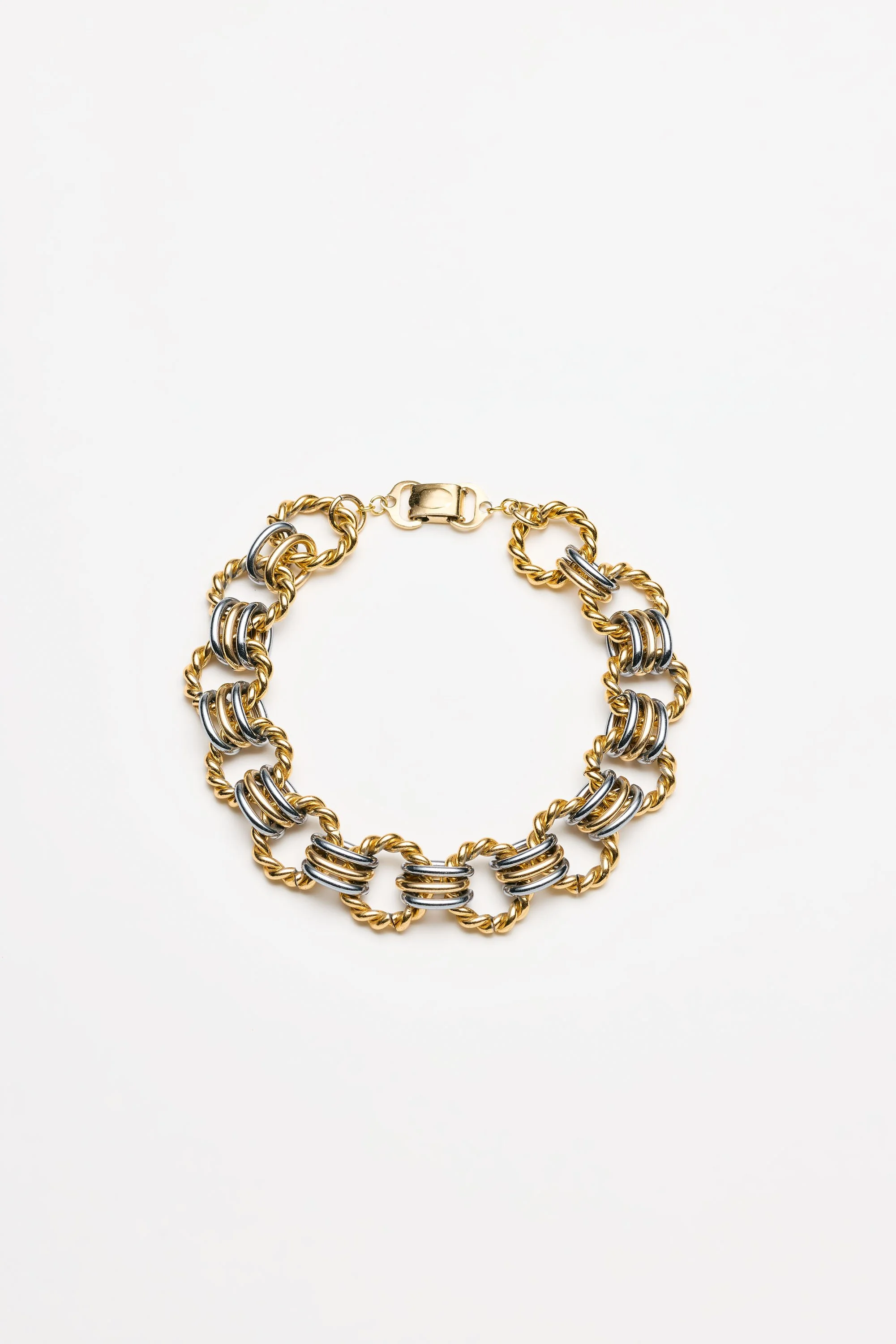
Trifari necklace in chain and rings look
France 1960s.
gold-plated and silver-plated metal
signed Made in France for Trifari
Trifari is a renowned vintage fashion jewelry brand known for its timeless elegance and innovative designs. Founded by Gustavo Trifari in 1910, an Italian immigrant with a background in goldsmithing. Initially established as "Trifari and Trifari" with his uncle Ludovico, the company underwent a significant transformation when his uncle left two years later. Gustavo Trifari continued the venture independently, laying the foundation for a celebrated jewelry brand. The company gained widespread acclaim for its high-quality craftsmanship and attention to detail. Throughout its history, Trifari has been associated with iconic designs worn by influential figures, including First Lady Mamie Eisenhower.
In 1917, Leone Krussman and Carl Fishel joined the company, leading to a pivotal period of growth and innovation. The brand's name was changed to "KTF," with an enlarged "T" at the center to represent the Trifari legacy. Krussman assumed the role of commercial director, while Fishel oversaw sales operations, contributing to the company's expanding success.
Trifari's evolution was marked by collaborations with esteemed designers, most notably Alfred Philippe, who joined the company in 1930. Philippe's creative vision significantly shaped Trifari's signature style, characterized by intricate designs, impeccable craftsmanship, and timeless elegance. His tenure as the brand's creative mind lasted until 1968 when Trifari solidified its reputation as a leader in fashion jewelry.
Over the years, Trifari's designs evolved to reflect changing fashion trends while maintaining its distinctive aesthetic. From classic pearl necklaces to bold statement pieces adorned with colorful gemstones, Trifari jewelry showcased diverse styles that appealed to fashion-forward individuals across generations. Through innovative designs and enduring craftsmanship, Trifari continues to captivate collectors and enthusiasts with its timeless allure and artistic ingenuity.
About Vintage Costume Jewelry:
Costume jewelry– also known as Fashion Jewelry– was especially made popular in the mid-20th century. While their materials were less precious than real gold and diamonds, using glass stones, semi-precicious stones and lead and brass, many big fashion houses and designers produced highly complex pieces of jewelry that stand for craftmanship that today can only be found in so-called Haute Joaillerie. Most famously, Coco Chanel popularized the use of “faux jewelry”, bringing costume jewelry to life with gold and faux pearls. Chanel's designs drew from various historical styles, including Byzantine and Renaissance influences, often featuring crosses and intricate metalwork. Her collaboration with glassmakers, such as the Gripoix family (Maison Gripoix), introduced richly colored glass beads and simulated gemstones, which added depth to her creations without the high cost of traditional precious stones.
Elsa Schiaparelli– Chanel’s lifelong rival– brought surrealist influences into costume jewelry design, famously collaborating with Salvador Dalí and Jean Cocteau. She created the House of Schiaparelli in Paris in 1927, celebrating Surrealism and eccentric fashions. Her collections were famous for unconventional and artistic themes like the human body, insects, or trompe-l'œil, and for the use of bright colors like her "shocking pink". While Schiaparelli had to close her avant-garde business in the late 1950s and was forgotten for decades, her designs have recently been rediscovered and are celebrated for their bold design.
In many instances, high-end custome jewelry has achieved a "collectible" status and increased value over time. Today, there is a substantial secondary market for vintage fashion jewelry. The main collecting market is for 'signed pieces', which have the maker's mark, usually stamped on the reverse. Amongst the most sought after are Miriam Haskell, Sherman, Coro, Butler and Wilson, Crown Trifari, and Sphinx.
The term signed however is an invention that only reached European production in the late 1950s- when American buyers started to ask for authentification to distinguish high class designers from mass-produced pieces, while in Europe all costume jewelry had been issued by the fashion houses themselves and hence remained somewhat exclusive from the start.
Trifari necklace in chain and rings look
France 1960s.
gold-plated and silver-plated metal
signed Made in France for Trifari
Trifari is a renowned vintage fashion jewelry brand known for its timeless elegance and innovative designs. Founded by Gustavo Trifari in 1910, an Italian immigrant with a background in goldsmithing. Initially established as "Trifari and Trifari" with his uncle Ludovico, the company underwent a significant transformation when his uncle left two years later. Gustavo Trifari continued the venture independently, laying the foundation for a celebrated jewelry brand. The company gained widespread acclaim for its high-quality craftsmanship and attention to detail. Throughout its history, Trifari has been associated with iconic designs worn by influential figures, including First Lady Mamie Eisenhower.
In 1917, Leone Krussman and Carl Fishel joined the company, leading to a pivotal period of growth and innovation. The brand's name was changed to "KTF," with an enlarged "T" at the center to represent the Trifari legacy. Krussman assumed the role of commercial director, while Fishel oversaw sales operations, contributing to the company's expanding success.
Trifari's evolution was marked by collaborations with esteemed designers, most notably Alfred Philippe, who joined the company in 1930. Philippe's creative vision significantly shaped Trifari's signature style, characterized by intricate designs, impeccable craftsmanship, and timeless elegance. His tenure as the brand's creative mind lasted until 1968 when Trifari solidified its reputation as a leader in fashion jewelry.
Over the years, Trifari's designs evolved to reflect changing fashion trends while maintaining its distinctive aesthetic. From classic pearl necklaces to bold statement pieces adorned with colorful gemstones, Trifari jewelry showcased diverse styles that appealed to fashion-forward individuals across generations. Through innovative designs and enduring craftsmanship, Trifari continues to captivate collectors and enthusiasts with its timeless allure and artistic ingenuity.
About Vintage Costume Jewelry:
Costume jewelry– also known as Fashion Jewelry– was especially made popular in the mid-20th century. While their materials were less precious than real gold and diamonds, using glass stones, semi-precicious stones and lead and brass, many big fashion houses and designers produced highly complex pieces of jewelry that stand for craftmanship that today can only be found in so-called Haute Joaillerie. Most famously, Coco Chanel popularized the use of “faux jewelry”, bringing costume jewelry to life with gold and faux pearls. Chanel's designs drew from various historical styles, including Byzantine and Renaissance influences, often featuring crosses and intricate metalwork. Her collaboration with glassmakers, such as the Gripoix family (Maison Gripoix), introduced richly colored glass beads and simulated gemstones, which added depth to her creations without the high cost of traditional precious stones.
Elsa Schiaparelli– Chanel’s lifelong rival– brought surrealist influences into costume jewelry design, famously collaborating with Salvador Dalí and Jean Cocteau. She created the House of Schiaparelli in Paris in 1927, celebrating Surrealism and eccentric fashions. Her collections were famous for unconventional and artistic themes like the human body, insects, or trompe-l'œil, and for the use of bright colors like her "shocking pink". While Schiaparelli had to close her avant-garde business in the late 1950s and was forgotten for decades, her designs have recently been rediscovered and are celebrated for their bold design.
In many instances, high-end custome jewelry has achieved a "collectible" status and increased value over time. Today, there is a substantial secondary market for vintage fashion jewelry. The main collecting market is for 'signed pieces', which have the maker's mark, usually stamped on the reverse. Amongst the most sought after are Miriam Haskell, Sherman, Coro, Butler and Wilson, Crown Trifari, and Sphinx.
The term signed however is an invention that only reached European production in the late 1950s- when American buyers started to ask for authentification to distinguish high class designers from mass-produced pieces, while in Europe all costume jewelry had been issued by the fashion houses themselves and hence remained somewhat exclusive from the start.