 Image 1 of 1
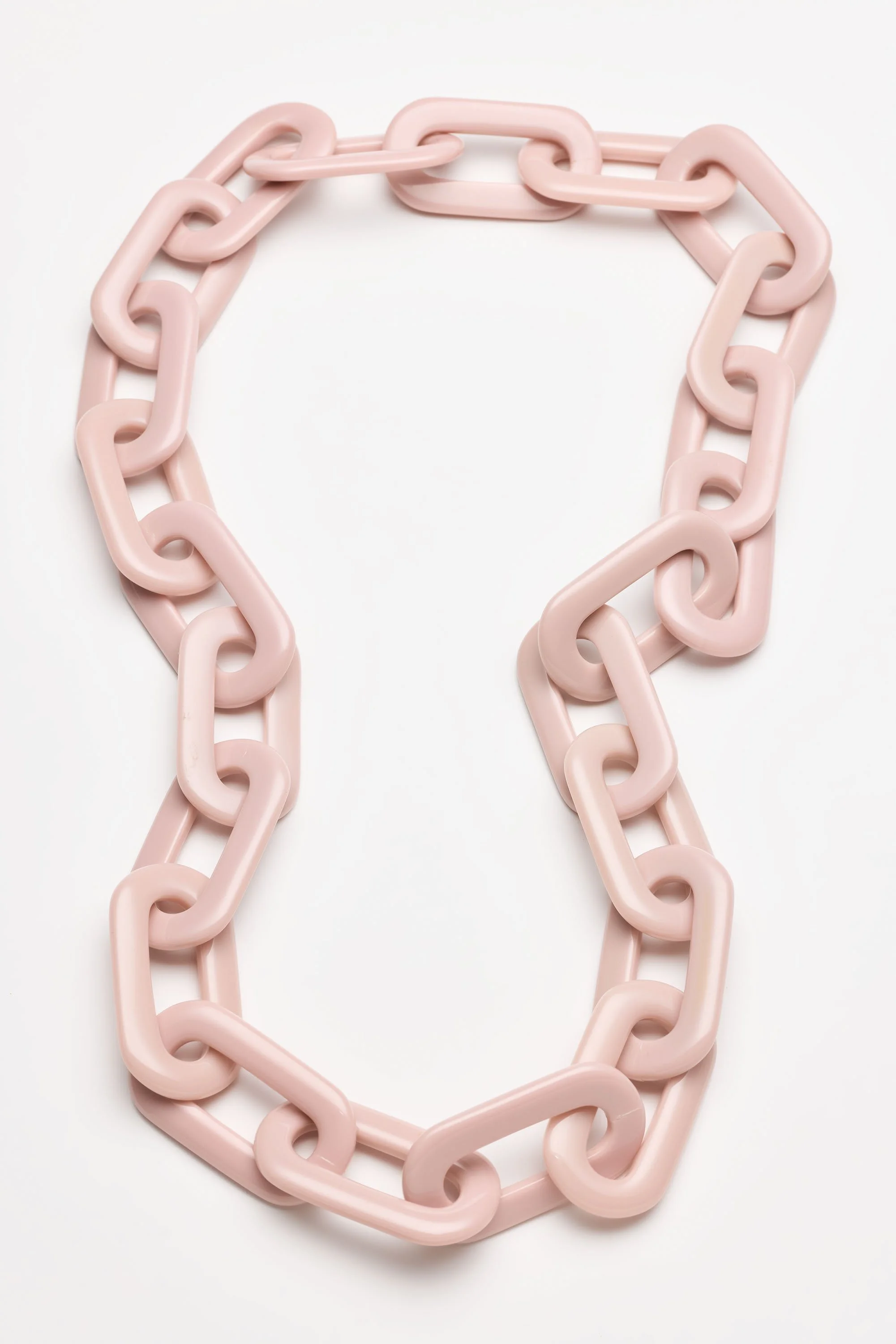
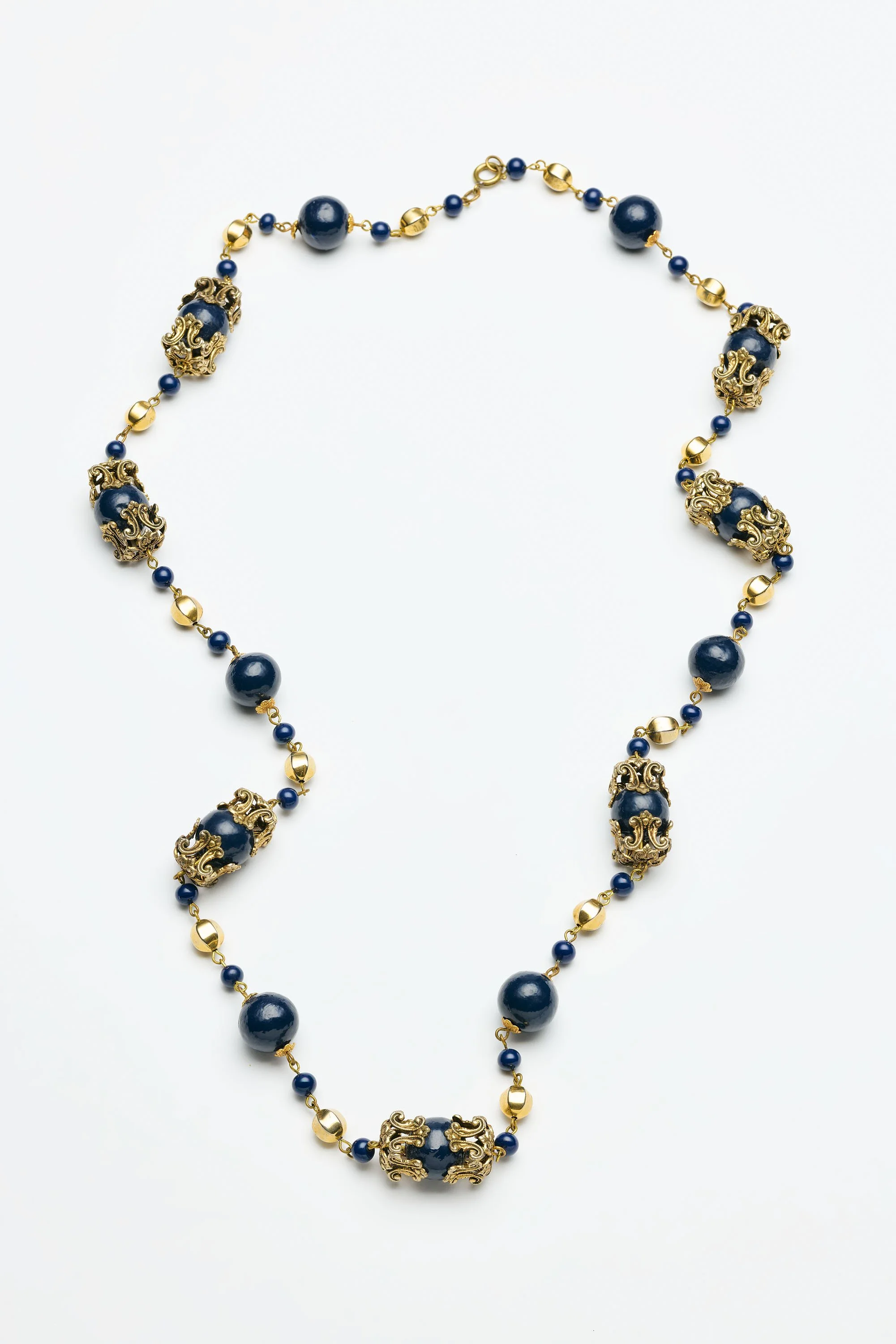
Sautoir by Maison Goossens, 1950/60, attributed to Chanel
unsigned
gold-coloured metal with lacquered wood
Maison Goossens made most of its jewellery for Chanel during this period and today is owned by Chanel
Robert Goossens, the brilliant craftsman and son of the owner of a foundry in the Marais neighbourhood, opened a small goldsmith's workshop in the 1950s. Driven by an insatiable curiosity and a taste for challenge, he was always ready to push technical boundaries. He interpreted and handled jewellery with daring and character. Indeed, it was these qualities and this visionary spirit that Gabrielle Chanel sought out. Together, the goldsmith and the fashion pioneer invented jewellery in antique and Byzantine styles, joyfully blurring the lines.
Since 1950, Goossens has been designing and creating jewelry and furniture imbued with a unique wealth of expression and aesthetic vitality. Fertile and infinite, the sources of inspiration – whether organic, architectural or historical – generously shape joyful creations where poetry and fantasy are expressed with complete freedom. Goossens: An agitator of brilliance. A balancing act of metal. An enhancer of lines.
Robert Goossens quickly became the preferred goldsmith of fashion designers. The historical complicity between these various encounters led to a couture spirit and an all-consuming desire to upend the established paradigms of creation. Goossens continues to put its savoir-faire and curiosity at the service of numerous fashion houses, young designers and architects.
About Vintage Costume Jewelry:
Costume jewelry– also known as Fashion Jewelry– was especially made popular in the mid-20th century. While their materials were less precious than real gold and diamonds, using glass stones, semi-precicious stones and lead and brass, many big fashion houses and designers produced highly complex pieces of jewelry that stand for craftmanship that today can only be found in so-called Haute Joaillerie. Most famously, Coco Chanel popularized the use of “faux jewelry”, bringing costume jewelry to life with gold and faux pearls. Chanel's designs drew from various historical styles, including Byzantine and Renaissance influences, often featuring crosses and intricate metalwork. Her collaboration with glassmakers, such as the Gripoix family (Maison Gripoix), introduced richly colored glass beads and simulated gemstones, which added depth to her creations without the high cost of traditional precious stones.
Elsa Schiaparelli– Chanel’s lifelong rival– brought surrealist influences into costume jewelry design, famously collaborating with Salvador Dalí and Jean Cocteau. She created the House of Schiaparelli in Paris in 1927, celebrating Surrealism and eccentric fashions. Her collections were famous for unconventional and artistic themes like the human body, insects, or trompe-l'œil, and for the use of bright colors like her "shocking pink". While Schiaparelli had to close her avant-garde business in the late 1950s and was forgotten for decades, her designs have recently been rediscovered and are celebrated for their bold design.
In many instances, high-end custome jewelry has achieved a "collectible" status and increased value over time. Today, there is a substantial secondary market for vintage fashion jewelry. The main collecting market is for 'signed pieces', which have the maker's mark, usually stamped on the reverse. Amongst the most sought after are Miriam Haskell, Sherman, Coro, Butler and Wilson, Crown Trifari, and Sphinx.
The term signed however is an invention that only reached European production in the late 1950s- when American buyers started to ask for authentification to distinguish high class designers from mass-produced pieces, while in Europe all costume jewelry had been issued by the fashion houses themselves and hence remained somewhat exclusive from the start.
Sautoir by Maison Goossens, 1950/60, attributed to Chanel
unsigned
gold-coloured metal with lacquered wood
Maison Goossens made most of its jewellery for Chanel during this period and today is owned by Chanel
Robert Goossens, the brilliant craftsman and son of the owner of a foundry in the Marais neighbourhood, opened a small goldsmith's workshop in the 1950s. Driven by an insatiable curiosity and a taste for challenge, he was always ready to push technical boundaries. He interpreted and handled jewellery with daring and character. Indeed, it was these qualities and this visionary spirit that Gabrielle Chanel sought out. Together, the goldsmith and the fashion pioneer invented jewellery in antique and Byzantine styles, joyfully blurring the lines.
Since 1950, Goossens has been designing and creating jewelry and furniture imbued with a unique wealth of expression and aesthetic vitality. Fertile and infinite, the sources of inspiration – whether organic, architectural or historical – generously shape joyful creations where poetry and fantasy are expressed with complete freedom. Goossens: An agitator of brilliance. A balancing act of metal. An enhancer of lines.
Robert Goossens quickly became the preferred goldsmith of fashion designers. The historical complicity between these various encounters led to a couture spirit and an all-consuming desire to upend the established paradigms of creation. Goossens continues to put its savoir-faire and curiosity at the service of numerous fashion houses, young designers and architects.
About Vintage Costume Jewelry:
Costume jewelry– also known as Fashion Jewelry– was especially made popular in the mid-20th century. While their materials were less precious than real gold and diamonds, using glass stones, semi-precicious stones and lead and brass, many big fashion houses and designers produced highly complex pieces of jewelry that stand for craftmanship that today can only be found in so-called Haute Joaillerie. Most famously, Coco Chanel popularized the use of “faux jewelry”, bringing costume jewelry to life with gold and faux pearls. Chanel's designs drew from various historical styles, including Byzantine and Renaissance influences, often featuring crosses and intricate metalwork. Her collaboration with glassmakers, such as the Gripoix family (Maison Gripoix), introduced richly colored glass beads and simulated gemstones, which added depth to her creations without the high cost of traditional precious stones.
Elsa Schiaparelli– Chanel’s lifelong rival– brought surrealist influences into costume jewelry design, famously collaborating with Salvador Dalí and Jean Cocteau. She created the House of Schiaparelli in Paris in 1927, celebrating Surrealism and eccentric fashions. Her collections were famous for unconventional and artistic themes like the human body, insects, or trompe-l'œil, and for the use of bright colors like her "shocking pink". While Schiaparelli had to close her avant-garde business in the late 1950s and was forgotten for decades, her designs have recently been rediscovered and are celebrated for their bold design.
In many instances, high-end custome jewelry has achieved a "collectible" status and increased value over time. Today, there is a substantial secondary market for vintage fashion jewelry. The main collecting market is for 'signed pieces', which have the maker's mark, usually stamped on the reverse. Amongst the most sought after are Miriam Haskell, Sherman, Coro, Butler and Wilson, Crown Trifari, and Sphinx.
The term signed however is an invention that only reached European production in the late 1950s- when American buyers started to ask for authentification to distinguish high class designers from mass-produced pieces, while in Europe all costume jewelry had been issued by the fashion houses themselves and hence remained somewhat exclusive from the start.