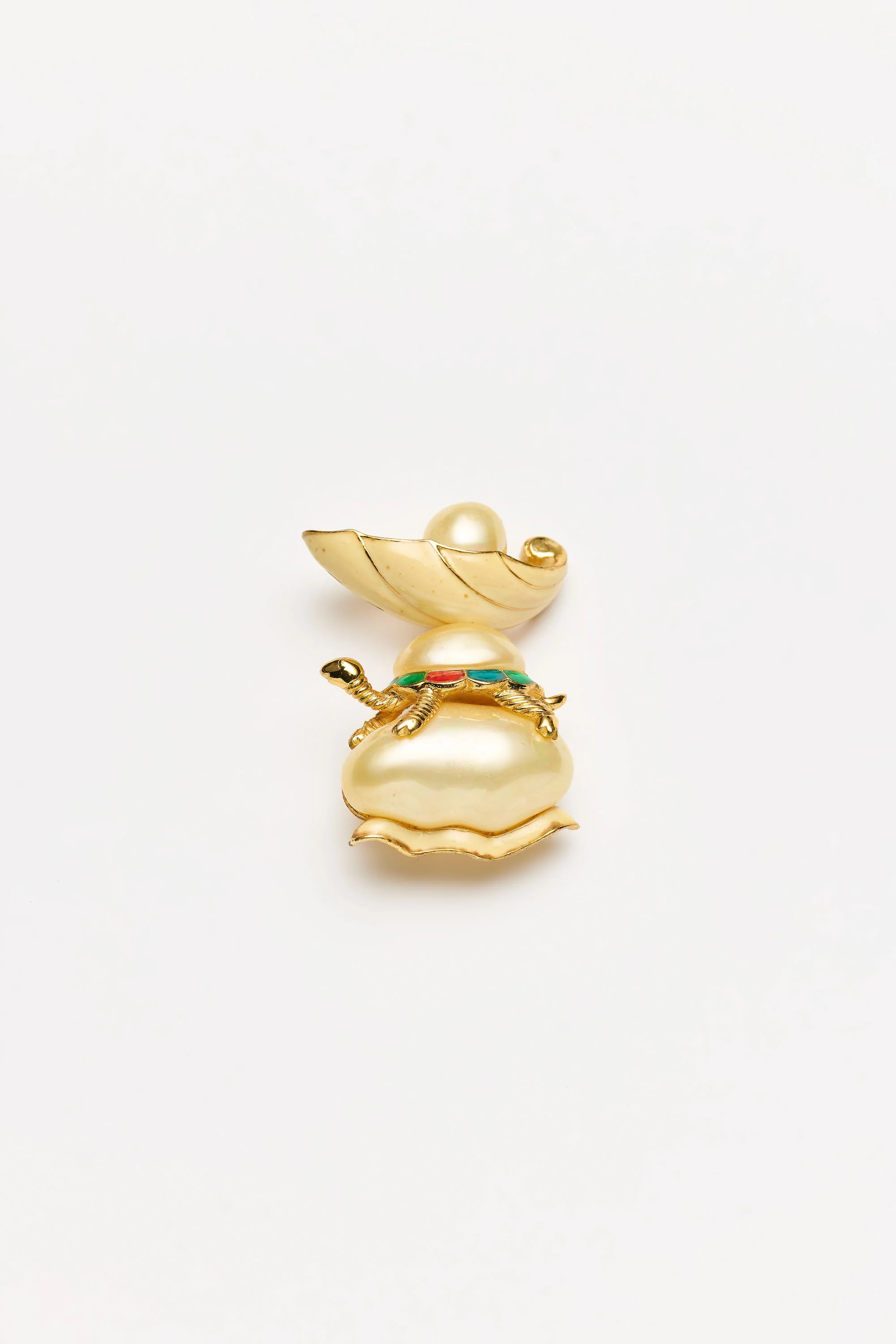
 Image 1 of 1
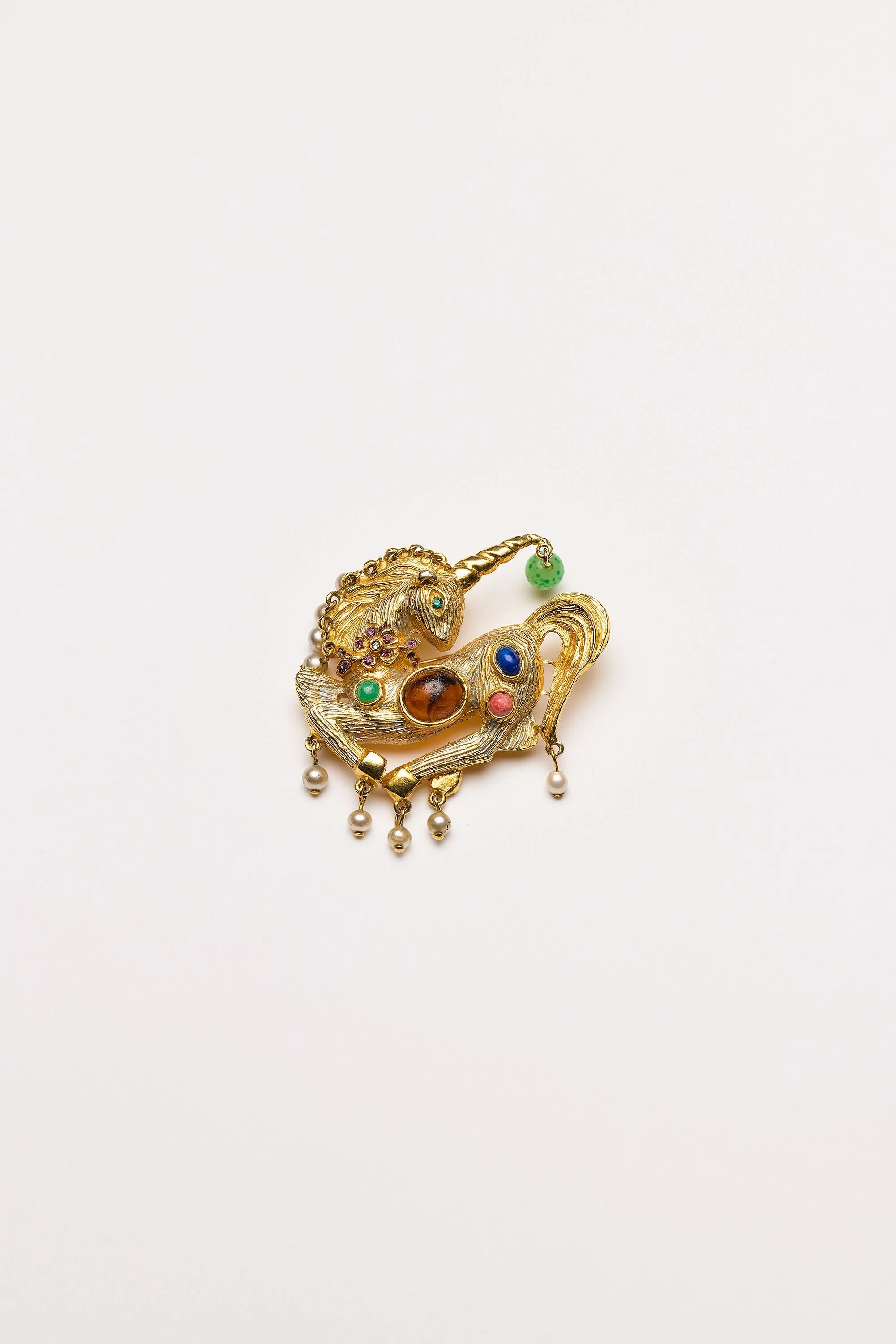
Kenneth Jay Lane (1932 – 2017)
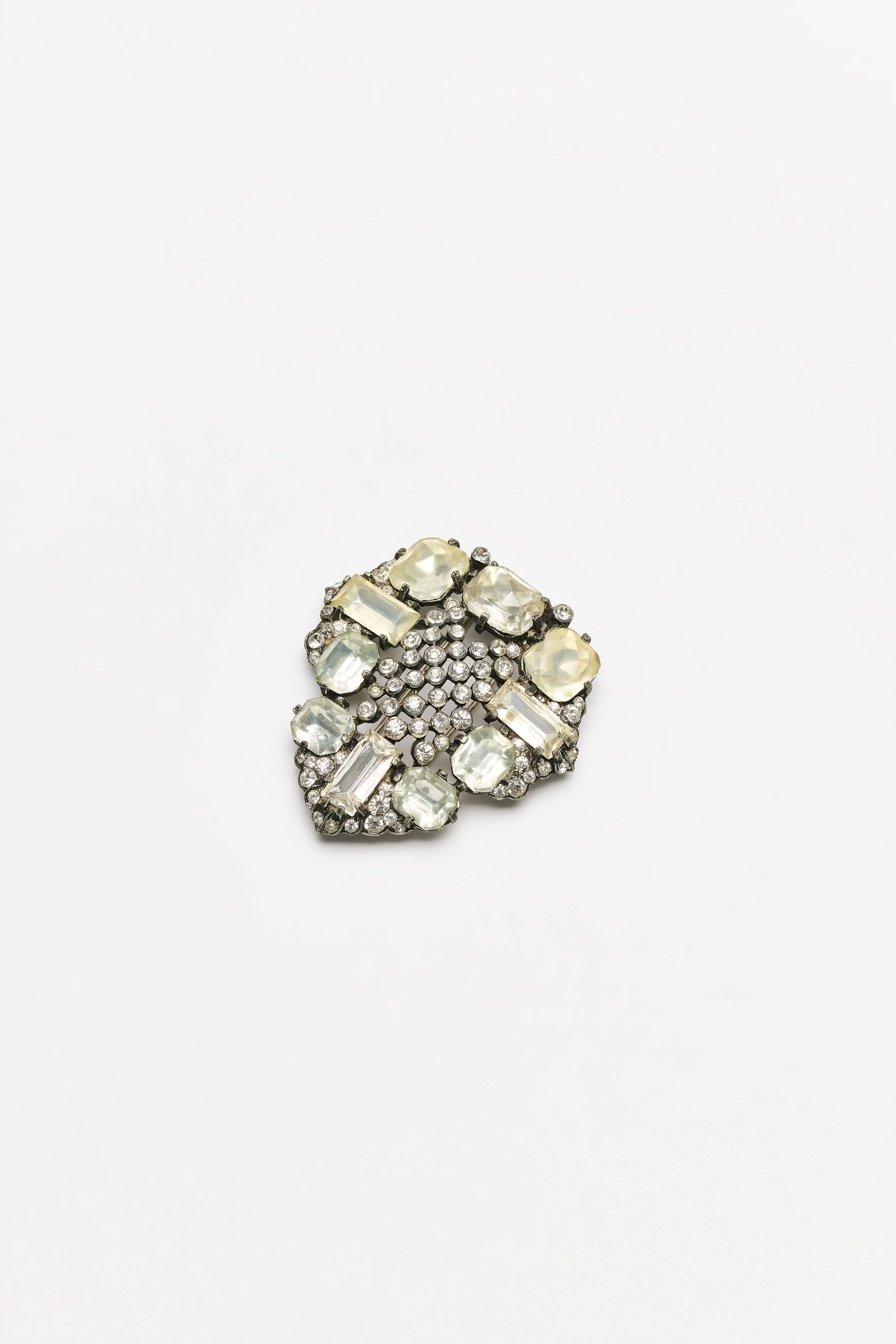
Unicorn Brooch
1960s
unsigned
Kenneth Jay Lane was a member of the New York art staff on Vogue, before going on to design footwear for Delman Shoes between 1956–58 and for the New York branch of Christian Dior from 1958–63, where he trained under Roger Vivier. Lane was also one of the subjects of Andy Warhol's Screen Tests (where, in a film taken in 1966, he represented "high fashion").
Lane started designing jewelry and launched his business in 1963 while producing bejeweled footwear for Dior and Arnold Scaasi. He first came to public attention after Jo Hughes, a fashion industry insider, showed some of his designs to Wallis, Duchess of Windsor, who bought several pieces and recommended him to her friends. As both costume jewelry and society reporting were popular at the time, press reports of this incident launched Lane's business. His talent at copying high end jewelry from a quick glimpse proved popular, his clients proudly wearing the faux pieces.
Jacqueline Kennedy was among those who commissioned fake jewels from Lane in order to enable her to wear them more freely while keeping the valuable originals in a safe. Kenneth Jay Lane’s illustrious clientele also included Princess Diana, Nancy Reagan, Princess Margaret, Greta Garbo, Babe Paley, Naty Abascal and Nan Kempner.
In addition to his American establishment, Lane had boutiques in London and Paris. He created designs for Elizabeth Taylor, Diana Vreeland, and Audrey Hepburn, among many other high-profile clients. More recently in 2011, Britney Spears and Nicole Richie were seen wearing Lane jewelry. The Duchess of Windsor was rumoured to have been buried wearing one of his belts.
Kenneth Jay Lane's designs continue to attract modern celebrities. Notable figures such as Lady Gaga, Rihanna, Miley Cyrus, and Katy Perry have incorporated Lane's creations into their distinctive styles. Other famous names, including Madonna or Sarah Jessica Parker have also been spotted wearing Lane's jewelry.
About Vintage Costume Jewelry:
Costume jewelry– also known as Fashion Jewelry– was especially made popular in the mid-20th century. While their materials were less precious than real gold and diamonds, using glass stones, semi-precicious stones and lead and brass, many big fashion houses and designers produced highly complex pieces of jewelry that stand for craftmanship that today can only be found in so-called Haute Joaillerie. Most famously, Coco Chanel popularized the use of “faux jewelry”, bringing costume jewelry to life with gold and faux pearls. Chanel's designs drew from various historical styles, including Byzantine and Renaissance influences, often featuring crosses and intricate metalwork. Her collaboration with glassmakers, such as the Gripoix family (Maison Gripoix), introduced richly colored glass beads and simulated gemstones, which added depth to her creations without the high cost of traditional precious stones.
Elsa Schiaparelli– Chanel’s lifelong rival– brought surrealist influences into costume jewelry design, famously collaborating with Salvador Dalí and Jean Cocteau. She created the House of Schiaparelli in Paris in 1927, celebrating Surrealism and eccentric fashions. Her collections were famous for unconventional and artistic themes like the human body, insects, or trompe-l'œil, and for the use of bright colors like her "shocking pink". While Schiaparelli had to close her avant-garde business in the late 1950s and was forgotten for decades, her designs have recently been rediscovered and are celebrated for their bold design.
In many instances, high-end custome jewelry has achieved a "collectible" status and increased value over time. Today, there is a substantial secondary market for vintage fashion jewelry. The main collecting market is for 'signed pieces', which have the maker's mark, usually stamped on the reverse. Amongst the most sought after are Miriam Haskell, Sherman, Coro, Butler and Wilson, Crown Trifari, and Sphinx.
The term signed however is an invention that only reached European production in the late 1950s- when American buyers started to ask for authentification to distinguish high class designers from mass-produced pieces, while in Europe all costume jewelry had been issued by the fashion houses themselves and hence remained somewhat exclusive from the start.
Kenneth Jay Lane (1932 – 2017)
Unicorn Brooch
1960s
unsigned
Kenneth Jay Lane was a member of the New York art staff on Vogue, before going on to design footwear for Delman Shoes between 1956–58 and for the New York branch of Christian Dior from 1958–63, where he trained under Roger Vivier. Lane was also one of the subjects of Andy Warhol's Screen Tests (where, in a film taken in 1966, he represented "high fashion").
Lane started designing jewelry and launched his business in 1963 while producing bejeweled footwear for Dior and Arnold Scaasi. He first came to public attention after Jo Hughes, a fashion industry insider, showed some of his designs to Wallis, Duchess of Windsor, who bought several pieces and recommended him to her friends. As both costume jewelry and society reporting were popular at the time, press reports of this incident launched Lane's business. His talent at copying high end jewelry from a quick glimpse proved popular, his clients proudly wearing the faux pieces.
Jacqueline Kennedy was among those who commissioned fake jewels from Lane in order to enable her to wear them more freely while keeping the valuable originals in a safe. Kenneth Jay Lane’s illustrious clientele also included Princess Diana, Nancy Reagan, Princess Margaret, Greta Garbo, Babe Paley, Naty Abascal and Nan Kempner.
In addition to his American establishment, Lane had boutiques in London and Paris. He created designs for Elizabeth Taylor, Diana Vreeland, and Audrey Hepburn, among many other high-profile clients. More recently in 2011, Britney Spears and Nicole Richie were seen wearing Lane jewelry. The Duchess of Windsor was rumoured to have been buried wearing one of his belts.
Kenneth Jay Lane's designs continue to attract modern celebrities. Notable figures such as Lady Gaga, Rihanna, Miley Cyrus, and Katy Perry have incorporated Lane's creations into their distinctive styles. Other famous names, including Madonna or Sarah Jessica Parker have also been spotted wearing Lane's jewelry.
About Vintage Costume Jewelry:
Costume jewelry– also known as Fashion Jewelry– was especially made popular in the mid-20th century. While their materials were less precious than real gold and diamonds, using glass stones, semi-precicious stones and lead and brass, many big fashion houses and designers produced highly complex pieces of jewelry that stand for craftmanship that today can only be found in so-called Haute Joaillerie. Most famously, Coco Chanel popularized the use of “faux jewelry”, bringing costume jewelry to life with gold and faux pearls. Chanel's designs drew from various historical styles, including Byzantine and Renaissance influences, often featuring crosses and intricate metalwork. Her collaboration with glassmakers, such as the Gripoix family (Maison Gripoix), introduced richly colored glass beads and simulated gemstones, which added depth to her creations without the high cost of traditional precious stones.
Elsa Schiaparelli– Chanel’s lifelong rival– brought surrealist influences into costume jewelry design, famously collaborating with Salvador Dalí and Jean Cocteau. She created the House of Schiaparelli in Paris in 1927, celebrating Surrealism and eccentric fashions. Her collections were famous for unconventional and artistic themes like the human body, insects, or trompe-l'œil, and for the use of bright colors like her "shocking pink". While Schiaparelli had to close her avant-garde business in the late 1950s and was forgotten for decades, her designs have recently been rediscovered and are celebrated for their bold design.
In many instances, high-end custome jewelry has achieved a "collectible" status and increased value over time. Today, there is a substantial secondary market for vintage fashion jewelry. The main collecting market is for 'signed pieces', which have the maker's mark, usually stamped on the reverse. Amongst the most sought after are Miriam Haskell, Sherman, Coro, Butler and Wilson, Crown Trifari, and Sphinx.
The term signed however is an invention that only reached European production in the late 1950s- when American buyers started to ask for authentification to distinguish high class designers from mass-produced pieces, while in Europe all costume jewelry had been issued by the fashion houses themselves and hence remained somewhat exclusive from the start.