 Image 1 of 1
Jacky de G.
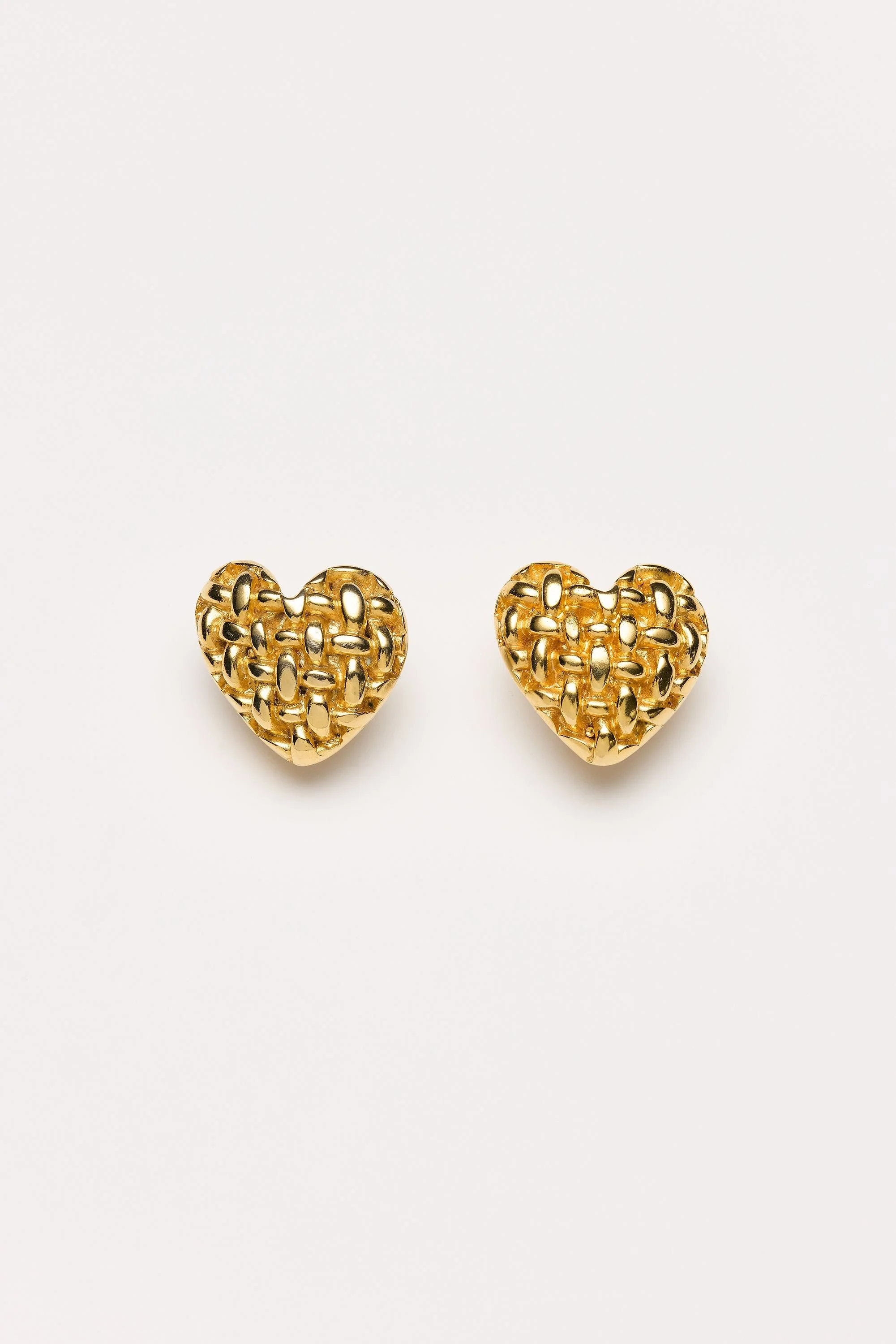
large heart-shaped earclips, gold-plated resin casting
1980s
signed Jacky de G., made in France.
Jacky de G. produced wearable and popular jewellery for Paris Couture in the 1980s.
Distinguished by its “excessiveness”, French jewelry of the 1980s was influenced by the high fashion of famous couturiers. Bright and bold, traditionally large, these decorations were created for the same brave and bright women who wanted to be noticed. Jean-Paul Gaultier, Laroche, Givenchy, Dior, Lagerfeld, Lacroix – fashion shows of these brands are impossible without the main emphasis – accessories and jewelry..
Among such designers was an anonymous young jeweler who marked her products Jacky de G. made in France. According to sources, de G may mean belonging to Guy Laroche, Gaultier, or Givenchy. However, the style of these decorations reminiscent of Lacroix or Chanel. Noteworthy, the jewelry marked Jacky de G was produced for a rather short period – mainly in the 1980s. Thus, all products of this brand with its forty-year history, are vintage and highly collectible.
Traditionally, the Jacky de G jewelers used metal of gold, or, less commonly, silver tones coated with yellow matte gold, or enamel. Also, lucite, bakelite, rhinestones, glass beads, sequins and crystals.
About Vintage Costume Jewelry:
Costume jewelry– also known as Fashion Jewelry– was especially made popular in the mid-20th century. While their materials were less precious than real gold and diamonds, using glass stones, semi-precicious stones and lead and brass, many big fashion houses and designers produced highly complex pieces of jewelry that stand for craftmanship that today can only be found in so-called Haute Joaillerie. Most famously, Coco Chanel popularized the use of “faux jewelry”, bringing costume jewelry to life with gold and faux pearls. Chanel's designs drew from various historical styles, including Byzantine and Renaissance influences, often featuring crosses and intricate metalwork. Her collaboration with glassmakers, such as the Gripoix family (Maison Gripoix), introduced richly colored glass beads and simulated gemstones, which added depth to her creations without the high cost of traditional precious stones.
Elsa Schiaparelli– Chanel’s lifelong rival– brought surrealist influences into costume jewelry design, famously collaborating with Salvador Dalí and Jean Cocteau. She created the House of Schiaparelli in Paris in 1927, celebrating Surrealism and eccentric fashions. Her collections were famous for unconventional and artistic themes like the human body, insects, or trompe-l'œil, and for the use of bright colors like her "shocking pink". While Schiaparelli had to close her avant-garde business in the late 1950s and was forgotten for decades, her designs have recently been rediscovered and are celebrated for their bold design.
In many instances, high-end custome jewelry has achieved a "collectible" status and increased value over time. Today, there is a substantial secondary market for vintage fashion jewelry. The main collecting market is for 'signed pieces', which have the maker's mark, usually stamped on the reverse. Amongst the most sought after are Miriam Haskell, Sherman, Coro, Butler and Wilson, Crown Trifari, and Sphinx.
The term signed however is an invention that only reached European production in the late 1950s- when American buyers started to ask for authentification to distinguish high class designers from mass-produced pieces, while in Europe all costume jewelry had been issued by the fashion houses themselves and hence remained somewhat exclusive from the start.
Jacky de G.
large heart-shaped earclips, gold-plated resin casting
1980s
signed Jacky de G., made in France.
Jacky de G. produced wearable and popular jewellery for Paris Couture in the 1980s.
Distinguished by its “excessiveness”, French jewelry of the 1980s was influenced by the high fashion of famous couturiers. Bright and bold, traditionally large, these decorations were created for the same brave and bright women who wanted to be noticed. Jean-Paul Gaultier, Laroche, Givenchy, Dior, Lagerfeld, Lacroix – fashion shows of these brands are impossible without the main emphasis – accessories and jewelry..
Among such designers was an anonymous young jeweler who marked her products Jacky de G. made in France. According to sources, de G may mean belonging to Guy Laroche, Gaultier, or Givenchy. However, the style of these decorations reminiscent of Lacroix or Chanel. Noteworthy, the jewelry marked Jacky de G was produced for a rather short period – mainly in the 1980s. Thus, all products of this brand with its forty-year history, are vintage and highly collectible.
Traditionally, the Jacky de G jewelers used metal of gold, or, less commonly, silver tones coated with yellow matte gold, or enamel. Also, lucite, bakelite, rhinestones, glass beads, sequins and crystals.
About Vintage Costume Jewelry:
Costume jewelry– also known as Fashion Jewelry– was especially made popular in the mid-20th century. While their materials were less precious than real gold and diamonds, using glass stones, semi-precicious stones and lead and brass, many big fashion houses and designers produced highly complex pieces of jewelry that stand for craftmanship that today can only be found in so-called Haute Joaillerie. Most famously, Coco Chanel popularized the use of “faux jewelry”, bringing costume jewelry to life with gold and faux pearls. Chanel's designs drew from various historical styles, including Byzantine and Renaissance influences, often featuring crosses and intricate metalwork. Her collaboration with glassmakers, such as the Gripoix family (Maison Gripoix), introduced richly colored glass beads and simulated gemstones, which added depth to her creations without the high cost of traditional precious stones.
Elsa Schiaparelli– Chanel’s lifelong rival– brought surrealist influences into costume jewelry design, famously collaborating with Salvador Dalí and Jean Cocteau. She created the House of Schiaparelli in Paris in 1927, celebrating Surrealism and eccentric fashions. Her collections were famous for unconventional and artistic themes like the human body, insects, or trompe-l'œil, and for the use of bright colors like her "shocking pink". While Schiaparelli had to close her avant-garde business in the late 1950s and was forgotten for decades, her designs have recently been rediscovered and are celebrated for their bold design.
In many instances, high-end custome jewelry has achieved a "collectible" status and increased value over time. Today, there is a substantial secondary market for vintage fashion jewelry. The main collecting market is for 'signed pieces', which have the maker's mark, usually stamped on the reverse. Amongst the most sought after are Miriam Haskell, Sherman, Coro, Butler and Wilson, Crown Trifari, and Sphinx.
The term signed however is an invention that only reached European production in the late 1950s- when American buyers started to ask for authentification to distinguish high class designers from mass-produced pieces, while in Europe all costume jewelry had been issued by the fashion houses themselves and hence remained somewhat exclusive from the start.