 Image 1 of 1
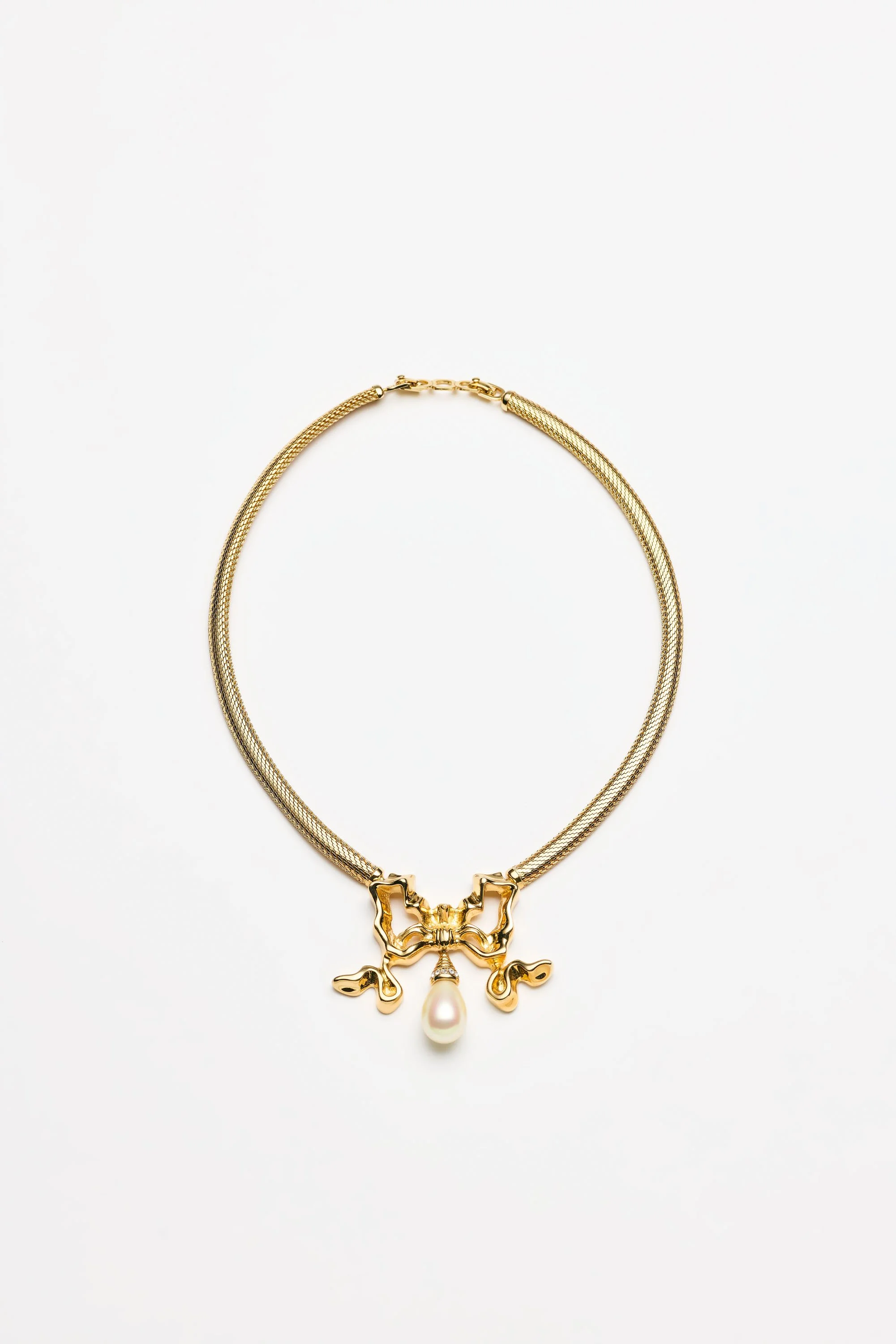
Christian Dior necklace with bow and pearl drops, signed, circa 1980,
with original grey Dior pouch
From its founding in the 1950s, the Dior name has been synonymous with timeless elegance and bold innovation. This spirit of excellence is woven through every piece of Dior jewellery, showcasing the meticulous attention to detail and craftsmanship that defines the brand.
Christian Dior’s deep love of flowers and nature is well known, and these passions were woven into his early jewellery designs. His first creations, like the iconic Rose Dior Bagatelle collection, were adorned with intricate rose motifs crafted in gold, pearls, and diamonds.
In 1952, renowned jewellery designer Mitchel Maer joined Dior and brought to life some of the brand’s most celebrated pieces, including the Fleurs de Cactus brooch and the legendary Mise en Dior necklace. Maer’s visionary designs cemented Dior’s jewellery line as a leading force in haute couture.
The Granville collection, launched in 1953, stands as a testament to Dior’s ability to fuse personal history with fashion. Inspired by the beauty of the Normandy town where Dior spent his childhood summers, this collection captivated high society and Hollywood stars alike, becoming a favourite of icons like Elizabeth Taylor and Marilyn Monroe.
The 1960s heralded a new chapter for Dior, with Marc Bohan stepping into the role of head designer. Bohan’s arrival ushered in a modernisation of Dior’s jewellery, introducing the bold, geometric shapes of the Miss Dior collection, influenced by the art deco movement. His collaborations with visionaries like Salvador Dali and Fulco di Verdura took Dior’s designs to new, avant-garde heights.
By the 1970s, Dior embraced the opulence and excess of the disco era with the likes of the Free Spirits necklace, designed by Victoire de Castellane. Featuring vibrant, oversized stones set in loose, asymmetrical patterns, the collection exuded a carefree, bohemian feel. Other standouts of the era included the Bamboo and Choker D necklaces, both of which epitomised the glamour and exuberance of the decade.
The 1980s brought a wave of extravagance, and Dior jewellery was no exception. The Bijoux de Dior collection embraced bold, statement-making pieces like the Pomme de Pin necklace, a golden masterpiece of oversized pinecones. Victoire de Castellane’s Tahiti collection blended vibrant stones such as coral and mother of pearl, while Dior experimented with contemporary materials like plexiglass and leather.
As the 1990s arrived, Dior’s jewellery took a more refined, elegant turn. Inspired by the tropical allure of the South Pacific and the glamour of old Hollywood, de Castellane’s Diorette collection became a symbol of Dior’s ability to evolve. The Gourmette collection, featuring chic chain-link designs, added a contemporary twist, mixing classic and modern elements.
About Vintage Costume Jewelry:
Costume jewelry– also known as Fashion Jewelry– was especially made popular in the mid-20th century. While their materials were less precious than real gold and diamonds, using glass stones, semi-precicious stones and lead and brass, many big fashion houses and designers produced highly complex pieces of jewelry that stand for craftmanship that today can only be found in so-called Haute Joaillerie. Most famously, Coco Chanel popularized the use of “faux jewelry”, bringing costume jewelry to life with gold and faux pearls. Chanel's designs drew from various historical styles, including Byzantine and Renaissance influences, often featuring crosses and intricate metalwork. Her collaboration with glassmakers, such as the Gripoix family (Maison Gripoix), introduced richly colored glass beads and simulated gemstones, which added depth to her creations without the high cost of traditional precious stones.
Elsa Schiaparelli– Chanel’s lifelong rival– brought surrealist influences into costume jewelry design, famously collaborating with Salvador Dalí and Jean Cocteau. She created the House of Schiaparelli in Paris in 1927, celebrating Surrealism and eccentric fashions. Her collections were famous for unconventional and artistic themes like the human body, insects, or trompe-l'œil, and for the use of bright colors like her "shocking pink". While Schiaparelli had to close her avant-garde business in the late 1950s and was forgotten for decades, her designs have recently been rediscovered and are celebrated for their bold design.
In many instances, high-end custome jewelry has achieved a "collectible" status and increased value over time. Today, there is a substantial secondary market for vintage fashion jewelry. The main collecting market is for 'signed pieces', which have the maker's mark, usually stamped on the reverse. Amongst the most sought after are Miriam Haskell, Sherman, Coro, Butler and Wilson, Crown Trifari, and Sphinx.
The term signed however is an invention that only reached European production in the late 1950s- when American buyers started to ask for authentification to distinguish high class designers from mass-produced pieces, while in Europe all costume jewelry had been issued by the fashion houses themselves and hence remained somewhat exclusive from the start.
Christian Dior necklace with bow and pearl drops, signed, circa 1980,
with original grey Dior pouch
From its founding in the 1950s, the Dior name has been synonymous with timeless elegance and bold innovation. This spirit of excellence is woven through every piece of Dior jewellery, showcasing the meticulous attention to detail and craftsmanship that defines the brand.
Christian Dior’s deep love of flowers and nature is well known, and these passions were woven into his early jewellery designs. His first creations, like the iconic Rose Dior Bagatelle collection, were adorned with intricate rose motifs crafted in gold, pearls, and diamonds.
In 1952, renowned jewellery designer Mitchel Maer joined Dior and brought to life some of the brand’s most celebrated pieces, including the Fleurs de Cactus brooch and the legendary Mise en Dior necklace. Maer’s visionary designs cemented Dior’s jewellery line as a leading force in haute couture.
The Granville collection, launched in 1953, stands as a testament to Dior’s ability to fuse personal history with fashion. Inspired by the beauty of the Normandy town where Dior spent his childhood summers, this collection captivated high society and Hollywood stars alike, becoming a favourite of icons like Elizabeth Taylor and Marilyn Monroe.
The 1960s heralded a new chapter for Dior, with Marc Bohan stepping into the role of head designer. Bohan’s arrival ushered in a modernisation of Dior’s jewellery, introducing the bold, geometric shapes of the Miss Dior collection, influenced by the art deco movement. His collaborations with visionaries like Salvador Dali and Fulco di Verdura took Dior’s designs to new, avant-garde heights.
By the 1970s, Dior embraced the opulence and excess of the disco era with the likes of the Free Spirits necklace, designed by Victoire de Castellane. Featuring vibrant, oversized stones set in loose, asymmetrical patterns, the collection exuded a carefree, bohemian feel. Other standouts of the era included the Bamboo and Choker D necklaces, both of which epitomised the glamour and exuberance of the decade.
The 1980s brought a wave of extravagance, and Dior jewellery was no exception. The Bijoux de Dior collection embraced bold, statement-making pieces like the Pomme de Pin necklace, a golden masterpiece of oversized pinecones. Victoire de Castellane’s Tahiti collection blended vibrant stones such as coral and mother of pearl, while Dior experimented with contemporary materials like plexiglass and leather.
As the 1990s arrived, Dior’s jewellery took a more refined, elegant turn. Inspired by the tropical allure of the South Pacific and the glamour of old Hollywood, de Castellane’s Diorette collection became a symbol of Dior’s ability to evolve. The Gourmette collection, featuring chic chain-link designs, added a contemporary twist, mixing classic and modern elements.
About Vintage Costume Jewelry:
Costume jewelry– also known as Fashion Jewelry– was especially made popular in the mid-20th century. While their materials were less precious than real gold and diamonds, using glass stones, semi-precicious stones and lead and brass, many big fashion houses and designers produced highly complex pieces of jewelry that stand for craftmanship that today can only be found in so-called Haute Joaillerie. Most famously, Coco Chanel popularized the use of “faux jewelry”, bringing costume jewelry to life with gold and faux pearls. Chanel's designs drew from various historical styles, including Byzantine and Renaissance influences, often featuring crosses and intricate metalwork. Her collaboration with glassmakers, such as the Gripoix family (Maison Gripoix), introduced richly colored glass beads and simulated gemstones, which added depth to her creations without the high cost of traditional precious stones.
Elsa Schiaparelli– Chanel’s lifelong rival– brought surrealist influences into costume jewelry design, famously collaborating with Salvador Dalí and Jean Cocteau. She created the House of Schiaparelli in Paris in 1927, celebrating Surrealism and eccentric fashions. Her collections were famous for unconventional and artistic themes like the human body, insects, or trompe-l'œil, and for the use of bright colors like her "shocking pink". While Schiaparelli had to close her avant-garde business in the late 1950s and was forgotten for decades, her designs have recently been rediscovered and are celebrated for their bold design.
In many instances, high-end custome jewelry has achieved a "collectible" status and increased value over time. Today, there is a substantial secondary market for vintage fashion jewelry. The main collecting market is for 'signed pieces', which have the maker's mark, usually stamped on the reverse. Amongst the most sought after are Miriam Haskell, Sherman, Coro, Butler and Wilson, Crown Trifari, and Sphinx.
The term signed however is an invention that only reached European production in the late 1950s- when American buyers started to ask for authentification to distinguish high class designers from mass-produced pieces, while in Europe all costume jewelry had been issued by the fashion houses themselves and hence remained somewhat exclusive from the start.