 Image 1 of 1
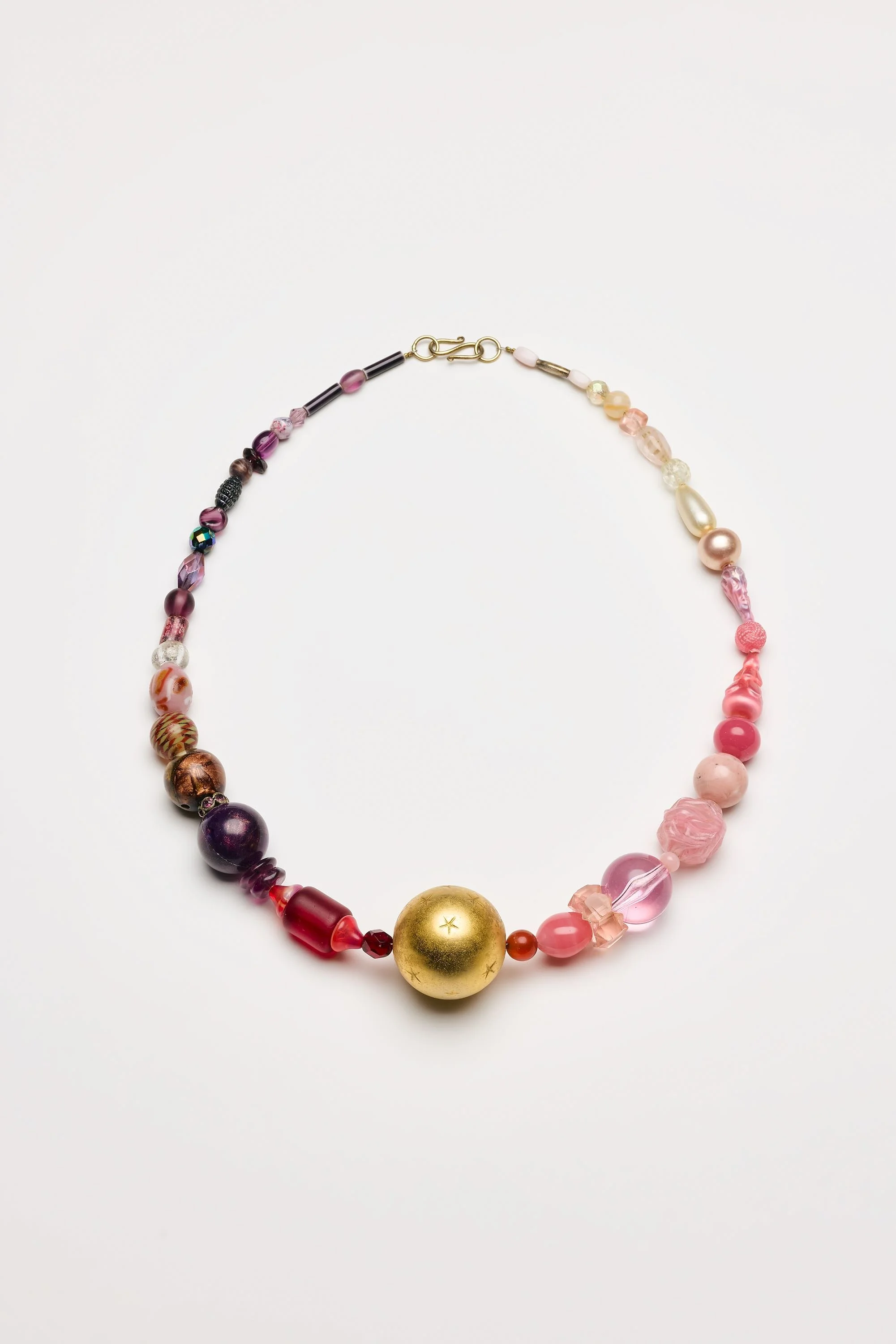
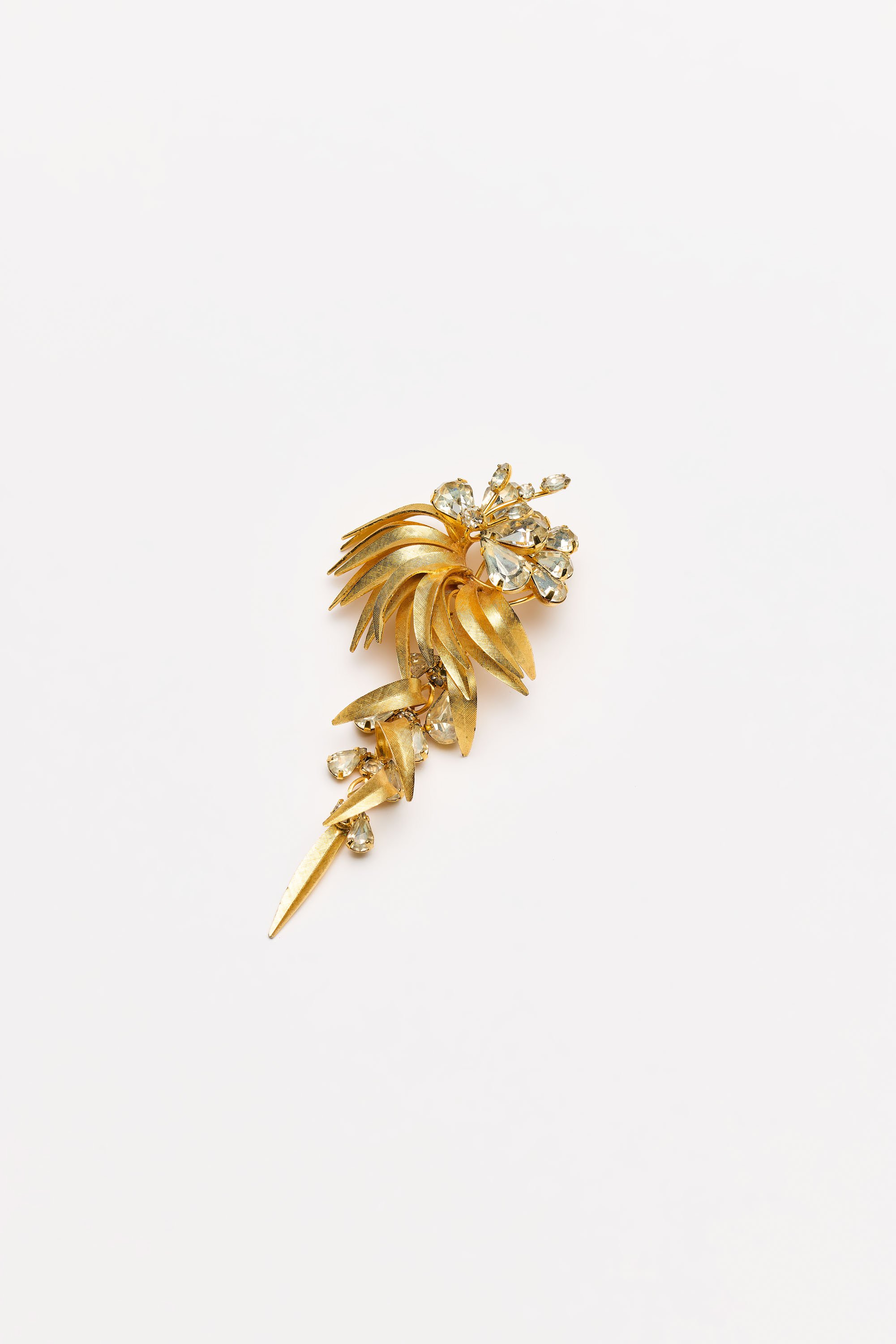
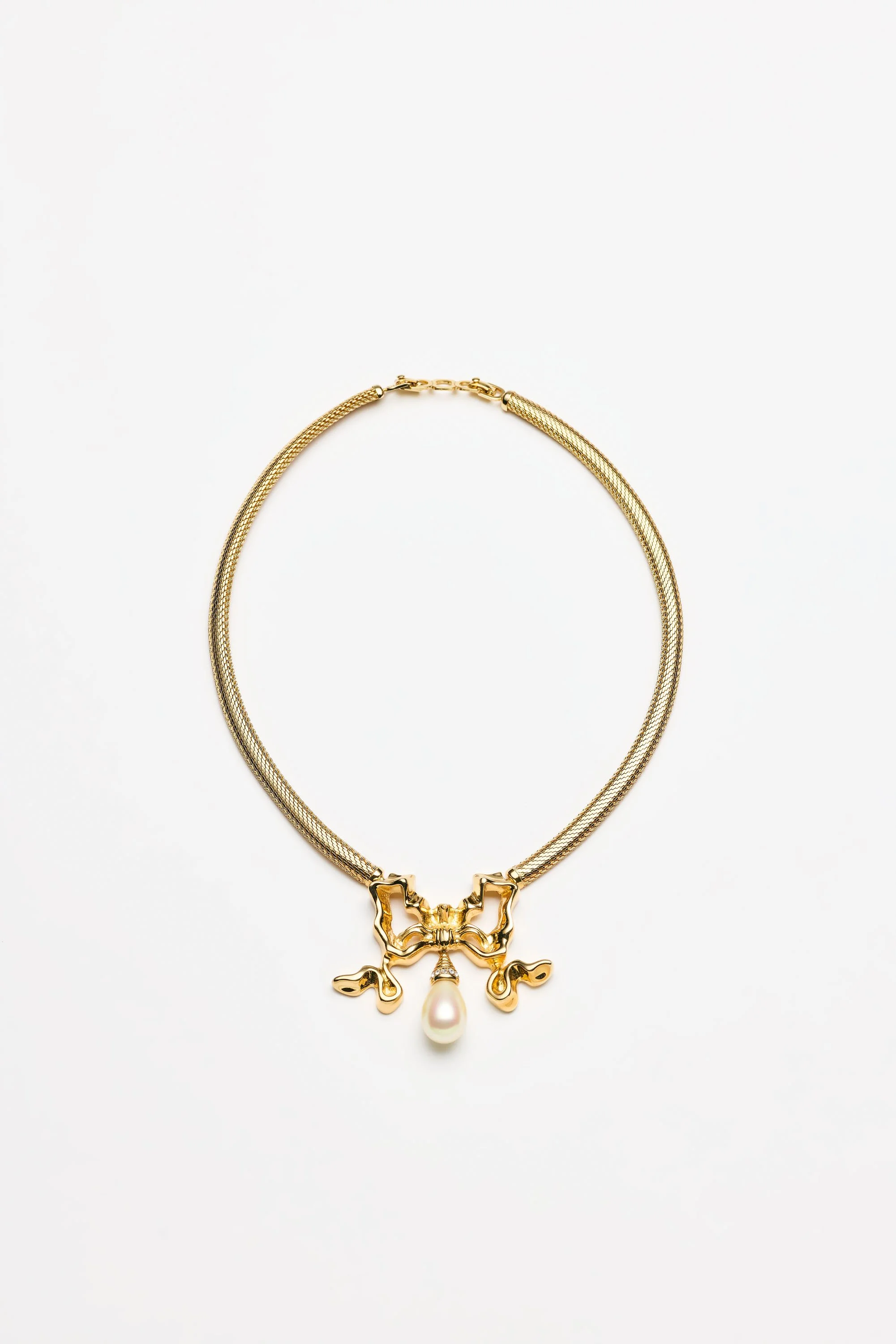
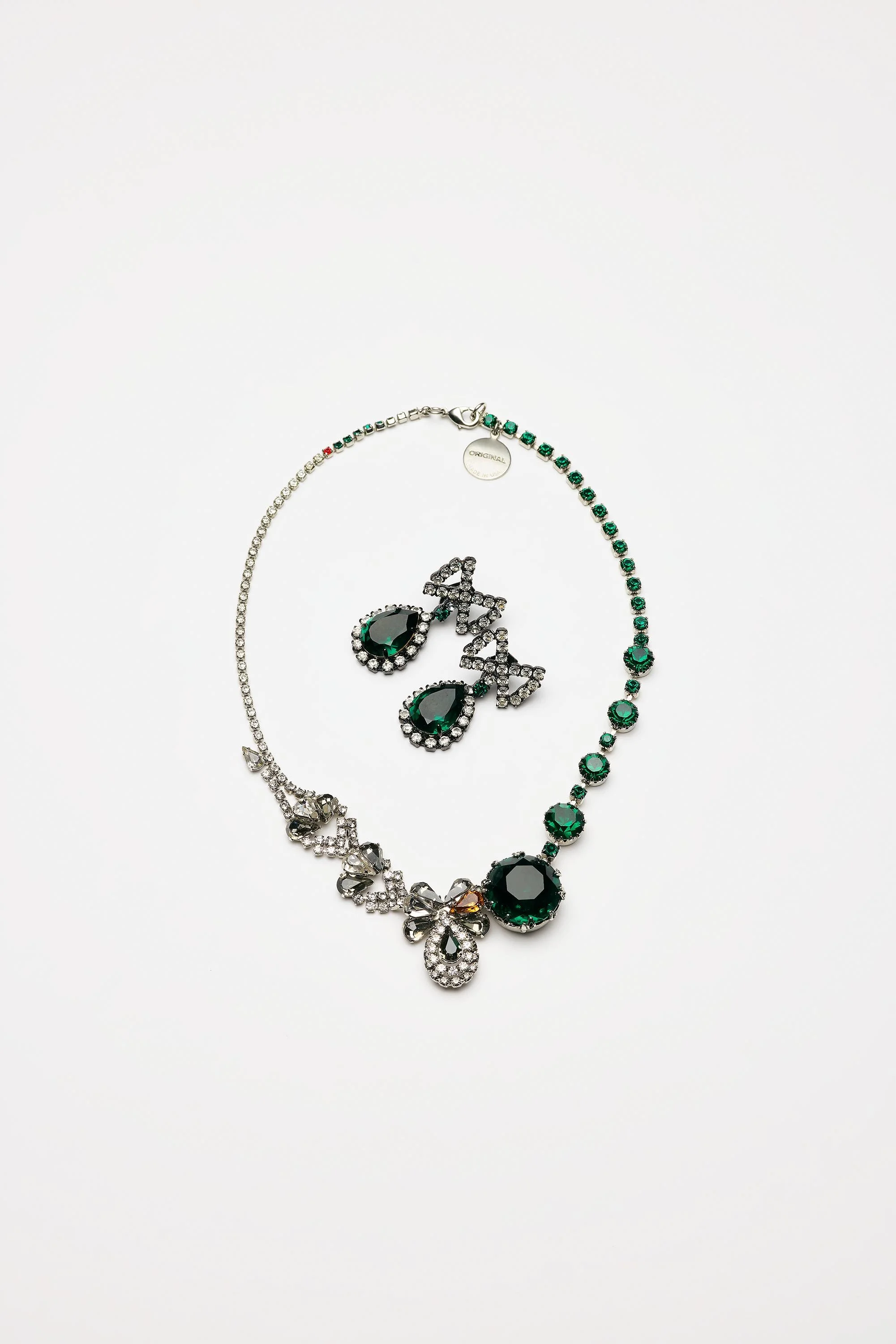
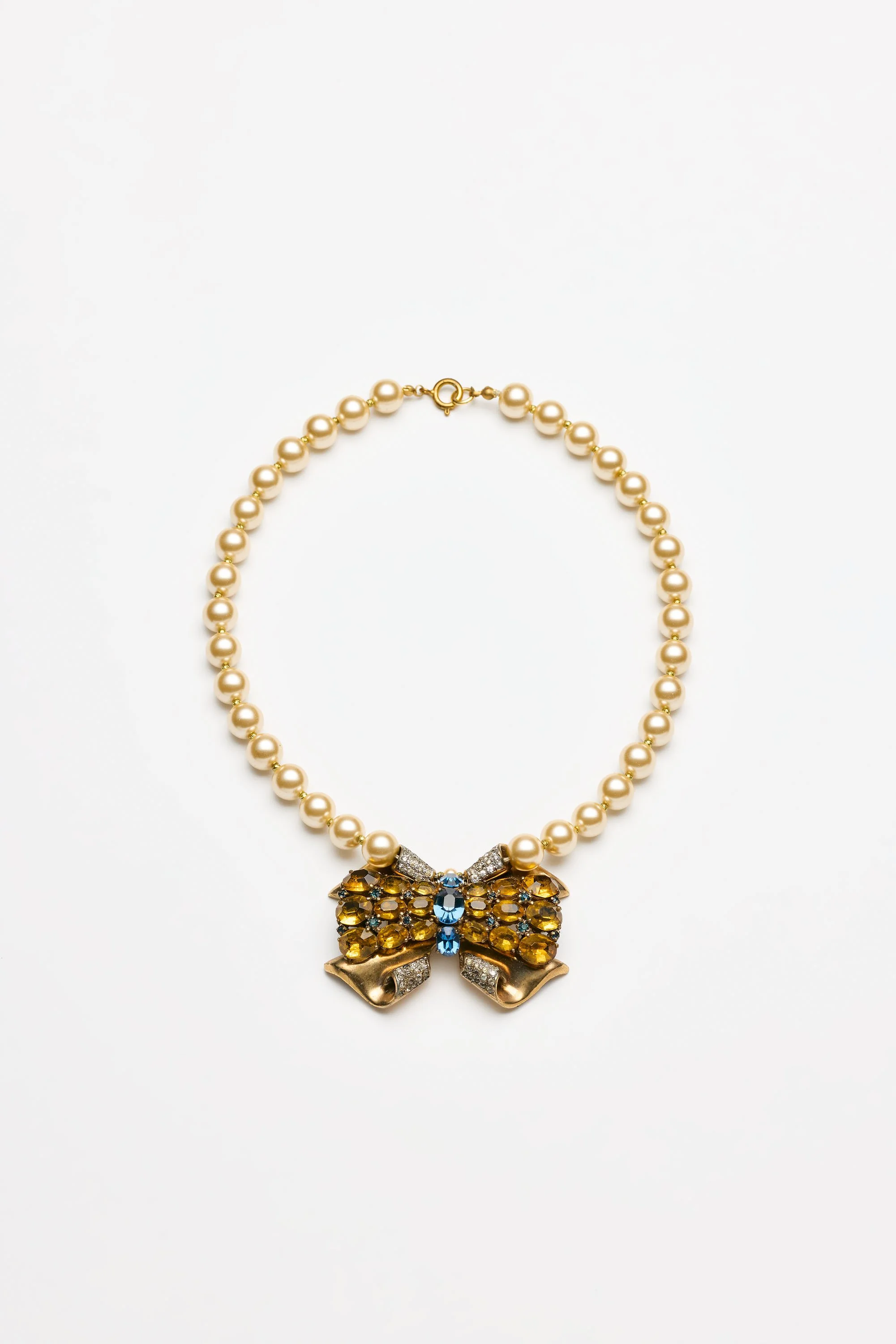
Pearl necklace with bow by Ciner, cocktail style,
circa 1940, signed
Sterling vermeil with yellow and blue glass stones, signed, presumably originally a brooch that was professionally converted into a necklace at the time.
Ciner was 130-Year-Old Costume Jewelry House With Glittering Craftsmanship that unfortunately closed in 2022. Established in 1892 by Emanuel Ciner, Ciner was the only surviving fine costume jewelry company left in the US that designs, manufactures, and produces each piece by hand in an NYC atelier.
Born in Austria in 1864, Emanuel Ciner came to the US in 1886 and opened the Ciner Jewelry Company six years later in Manhattan, making jewelry pieces from the traditional precious gems, gold, and platinum.
Over the years, the Ciner House created highly artistic pieces. The fundamental difference between Ciner and other jewelry manufacturers is in innovative technologies (including a patent for an "Improved Ear-Ring") and rich experience with precious materials in parallel with the commitment to hand-crafting pieces in the traditional way.
Highly sought after among Ciner jewelry are the chokers and bracelets with tiny turquoise seed pearls or crystal squares in interlocking zigzag patterns, the sculptural pendants and cuffs, the hefty chains, the crystal-studded drop earrings, and the brooches in stylized human shape jewels with enamel, rhinestones, and faux pearls.
In 1930, the Ciners created their own line of fine costume jewelry, first in silver, then in other white metals, with glass cabochons and rhinestones instead of diamonds, and other stones such as marcasite. They stood out among the other jewelry companies due to their innovative technologies and vast experience with precious materials. This technology, in particular, allowed Ciner to make artificial pearls similar to natural ones. Thus, many of the designs rivaled fine jewelry pieces. They drew inspiration from nature and created graciously, colorful jewelry shaped like animals, insects, and flowers, all crafted with perfect attention to detail.
In the late 1940s, Jolie Gabor, the mother of Zsa Zsa and Eva Gabor, began carrying Ciner jewelry in her Madison Avenue boutique in New York. In the next decades, more and more department stores began to work with Ciner and sell their jewelry to their clientele.
By the 1960s, the company hit its stride. Ciner jewelry was sold at some of the most fashionable stores and was worn by stars like Elizabeth Taylor, a long-time client of Ciner House, Jacqueline Kennedy, and the Duchess of Windsor. In the famous 1957 Joe Shere Photo of Sohpia Loren sneering at Jane Mansfield's decolletage, Mansfield wears splendid shoulder-grazing Ciner earrings.
Each piece of Ciner jewelry began with dozens of elements that are cast in rubber molds and then individually filed and polished, plated in a particularly thick layer of 18-karat gold or rhodium, assembled on the bench, and painted with enamel or set with stones. This process that most costume jewelers gave up to as is too time-consuming or costly is nearly identical to the one used by the most famous Maisons in Paris. But Ciner kept making its jewelry this way weren't willing to compromise.
About Vintage Costume Jewelry:
Costume jewelry– also known as Fashion Jewelry– was especially made popular in the mid-20th century. While their materials were less precious than real gold and diamonds, using glass stones, semi-precicious stones and lead and brass, many big fashion houses and designers produced highly complex pieces of jewelry that stand for craftmanship that today can only be found in so-called Haute Joaillerie. Most famously, Coco Chanel popularized the use of “faux jewelry”, bringing costume jewelry to life with gold and faux pearls. Chanel's designs drew from various historical styles, including Byzantine and Renaissance influences, often featuring crosses and intricate metalwork. Her collaboration with glassmakers, such as the Gripoix family (Maison Gripoix), introduced richly colored glass beads and simulated gemstones, which added depth to her creations without the high cost of traditional precious stones.
Elsa Schiaparelli– Chanel’s lifelong rival– brought surrealist influences into costume jewelry design, famously collaborating with Salvador Dalí and Jean Cocteau. She created the House of Schiaparelli in Paris in 1927, celebrating Surrealism and eccentric fashions. Her collections were famous for unconventional and artistic themes like the human body, insects, or trompe-l'œil, and for the use of bright colors like her "shocking pink". While Schiaparelli had to close her avant-garde business in the late 1950s and was forgotten for decades, her designs have recently been rediscovered and are celebrated for their bold design.
In many instances, high-end custome jewelry has achieved a "collectible" status and increased value over time. Today, there is a substantial secondary market for vintage fashion jewelry. The main collecting market is for 'signed pieces', which have the maker's mark, usually stamped on the reverse. Amongst the most sought after are Miriam Haskell, Sherman, Coro, Butler and Wilson, Crown Trifari, and Sphinx.
The term signed however is an invention that only reached European production in the late 1950s- when American buyers started to ask for authentification to distinguish high class designers from mass-produced pieces, while in Europe all costume jewelry had been issued by the fashion houses themselves and hence remained somewhat exclusive from the start.
Pearl necklace with bow by Ciner, cocktail style,
circa 1940, signed
Sterling vermeil with yellow and blue glass stones, signed, presumably originally a brooch that was professionally converted into a necklace at the time.
Ciner was 130-Year-Old Costume Jewelry House With Glittering Craftsmanship that unfortunately closed in 2022. Established in 1892 by Emanuel Ciner, Ciner was the only surviving fine costume jewelry company left in the US that designs, manufactures, and produces each piece by hand in an NYC atelier.
Born in Austria in 1864, Emanuel Ciner came to the US in 1886 and opened the Ciner Jewelry Company six years later in Manhattan, making jewelry pieces from the traditional precious gems, gold, and platinum.
Over the years, the Ciner House created highly artistic pieces. The fundamental difference between Ciner and other jewelry manufacturers is in innovative technologies (including a patent for an "Improved Ear-Ring") and rich experience with precious materials in parallel with the commitment to hand-crafting pieces in the traditional way.
Highly sought after among Ciner jewelry are the chokers and bracelets with tiny turquoise seed pearls or crystal squares in interlocking zigzag patterns, the sculptural pendants and cuffs, the hefty chains, the crystal-studded drop earrings, and the brooches in stylized human shape jewels with enamel, rhinestones, and faux pearls.
In 1930, the Ciners created their own line of fine costume jewelry, first in silver, then in other white metals, with glass cabochons and rhinestones instead of diamonds, and other stones such as marcasite. They stood out among the other jewelry companies due to their innovative technologies and vast experience with precious materials. This technology, in particular, allowed Ciner to make artificial pearls similar to natural ones. Thus, many of the designs rivaled fine jewelry pieces. They drew inspiration from nature and created graciously, colorful jewelry shaped like animals, insects, and flowers, all crafted with perfect attention to detail.
In the late 1940s, Jolie Gabor, the mother of Zsa Zsa and Eva Gabor, began carrying Ciner jewelry in her Madison Avenue boutique in New York. In the next decades, more and more department stores began to work with Ciner and sell their jewelry to their clientele.
By the 1960s, the company hit its stride. Ciner jewelry was sold at some of the most fashionable stores and was worn by stars like Elizabeth Taylor, a long-time client of Ciner House, Jacqueline Kennedy, and the Duchess of Windsor. In the famous 1957 Joe Shere Photo of Sohpia Loren sneering at Jane Mansfield's decolletage, Mansfield wears splendid shoulder-grazing Ciner earrings.
Each piece of Ciner jewelry began with dozens of elements that are cast in rubber molds and then individually filed and polished, plated in a particularly thick layer of 18-karat gold or rhodium, assembled on the bench, and painted with enamel or set with stones. This process that most costume jewelers gave up to as is too time-consuming or costly is nearly identical to the one used by the most famous Maisons in Paris. But Ciner kept making its jewelry this way weren't willing to compromise.
About Vintage Costume Jewelry:
Costume jewelry– also known as Fashion Jewelry– was especially made popular in the mid-20th century. While their materials were less precious than real gold and diamonds, using glass stones, semi-precicious stones and lead and brass, many big fashion houses and designers produced highly complex pieces of jewelry that stand for craftmanship that today can only be found in so-called Haute Joaillerie. Most famously, Coco Chanel popularized the use of “faux jewelry”, bringing costume jewelry to life with gold and faux pearls. Chanel's designs drew from various historical styles, including Byzantine and Renaissance influences, often featuring crosses and intricate metalwork. Her collaboration with glassmakers, such as the Gripoix family (Maison Gripoix), introduced richly colored glass beads and simulated gemstones, which added depth to her creations without the high cost of traditional precious stones.
Elsa Schiaparelli– Chanel’s lifelong rival– brought surrealist influences into costume jewelry design, famously collaborating with Salvador Dalí and Jean Cocteau. She created the House of Schiaparelli in Paris in 1927, celebrating Surrealism and eccentric fashions. Her collections were famous for unconventional and artistic themes like the human body, insects, or trompe-l'œil, and for the use of bright colors like her "shocking pink". While Schiaparelli had to close her avant-garde business in the late 1950s and was forgotten for decades, her designs have recently been rediscovered and are celebrated for their bold design.
In many instances, high-end custome jewelry has achieved a "collectible" status and increased value over time. Today, there is a substantial secondary market for vintage fashion jewelry. The main collecting market is for 'signed pieces', which have the maker's mark, usually stamped on the reverse. Amongst the most sought after are Miriam Haskell, Sherman, Coro, Butler and Wilson, Crown Trifari, and Sphinx.
The term signed however is an invention that only reached European production in the late 1950s- when American buyers started to ask for authentification to distinguish high class designers from mass-produced pieces, while in Europe all costume jewelry had been issued by the fashion houses themselves and hence remained somewhat exclusive from the start.