 Image 1 of 1
BillyBoy* (1960)
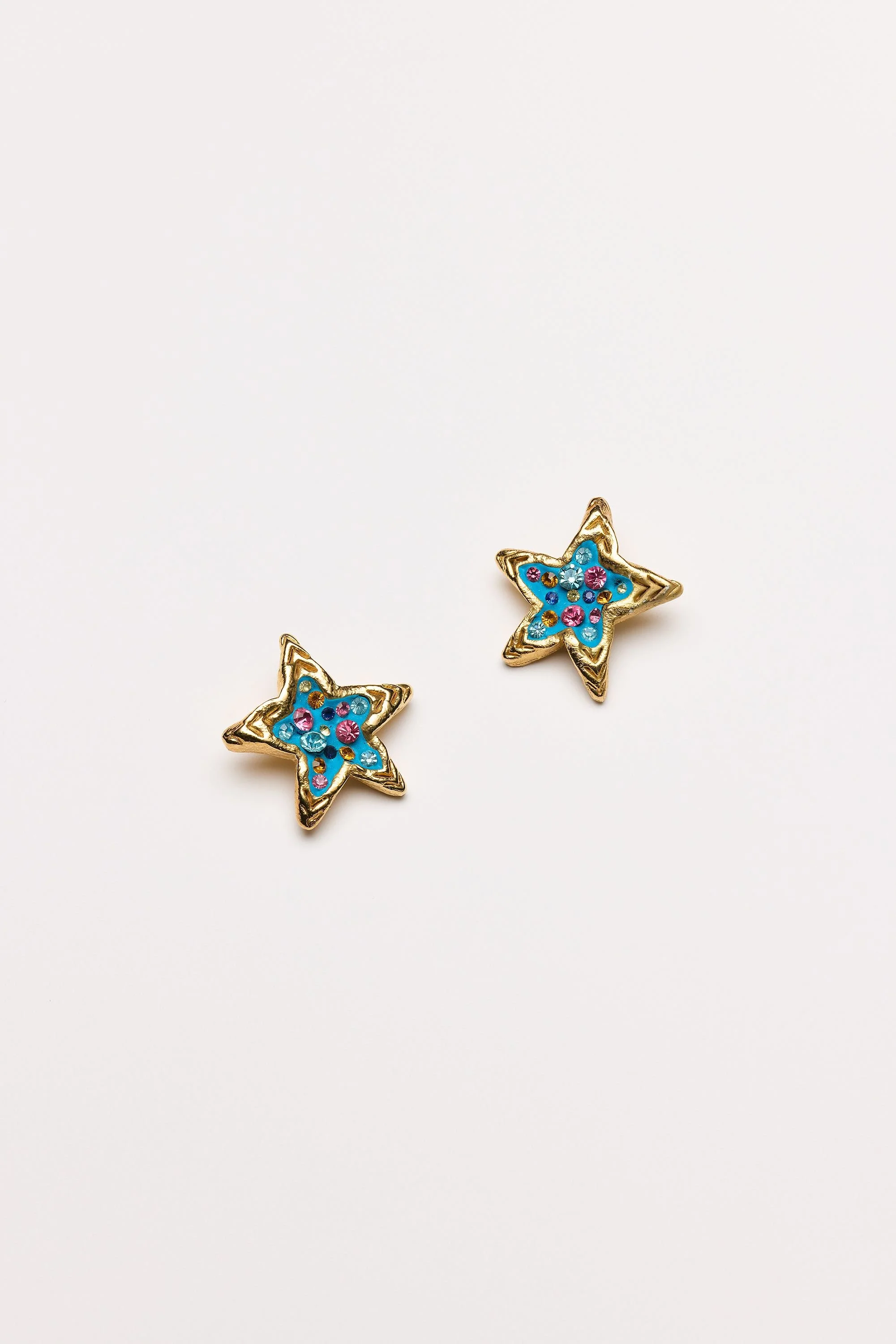
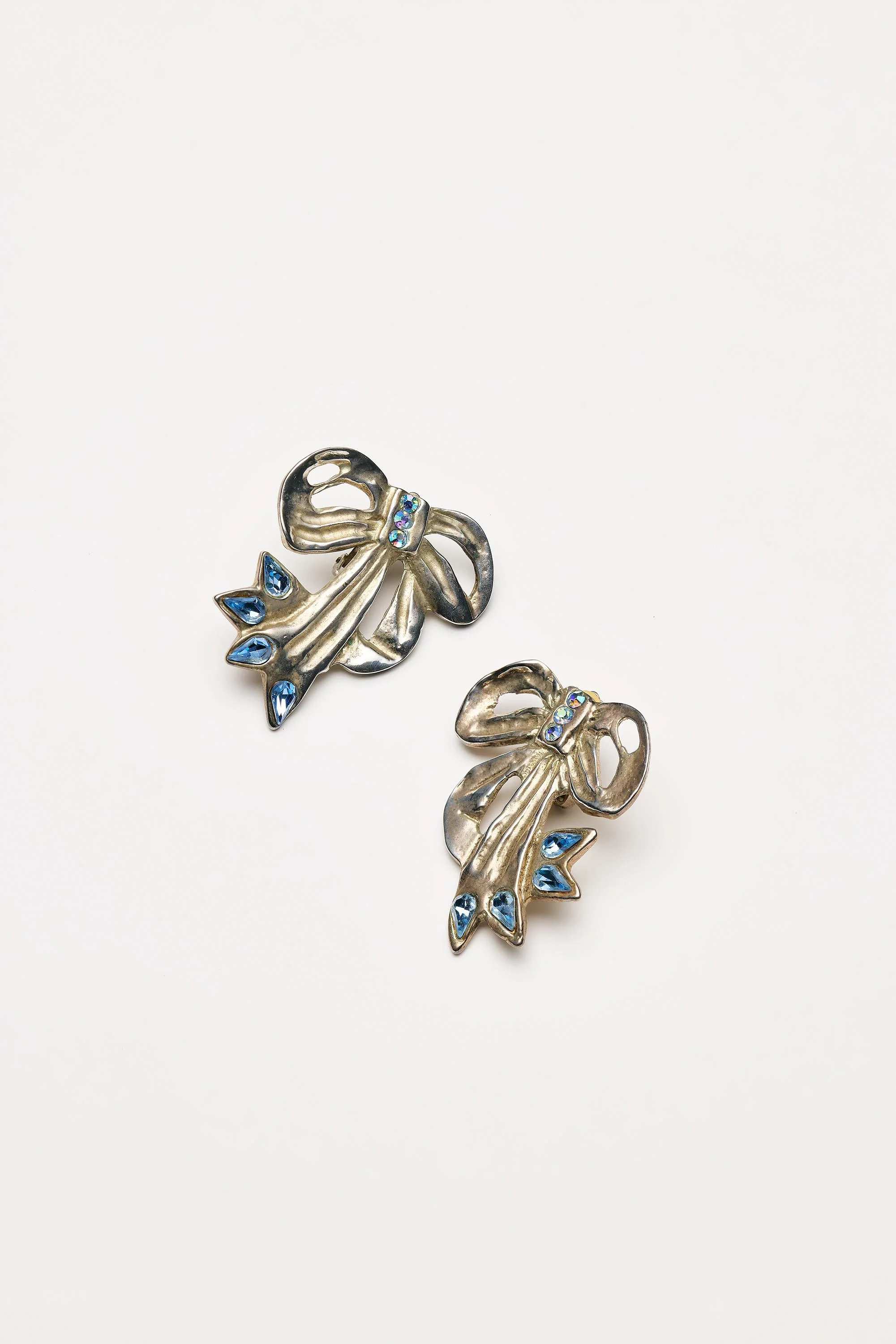
A pair of silver plated earclips in the form of dancing bows, hand-set with blue rhinestones
mid 1980s.
unsigned but published in various magazines
BillyBoy* is an American artist, socialite and fashion designer who was a muse of Andy Warhol. Born in Vienna, he was adopted by a Russian couple who moved to New York City when he was four.
In 1979, at the tender age of 19, BillyBoy, having already made an impact in New York and LA, moved himself and his couture collection to Paris. France’s creative community and social aristocracy welcomed the eccentric teenager, while local trendy magazine ACTUEL published a 14-page cover story upon his arrival, ironically titled “At Last, a Normal Young Man”. BillyBoy’s eclectic style – which inspired Jean Paul Gaultier to launch his first menswear collection in the early 1980s - and avant-garde personality, were instant hits throughout the city of lights.
In 1984, BillyBoy* and his partner Jean Pierre Lestrade ("Lala") opened the ‘Surreal Bijoux’ workshop and showroom in Paris, in an effort to “usher in a new era in costume jewelry”. After designing over 1,000 unique pieces for the launch party, with the motto ‘Get Groovy!’, the new brand became an overnight sensation and BillyBoy* was hired to create jewelry for various fashion houses across Paris, from classic couturiers like Emanuel Ungaro, Hanae Mori and Thierry Mugler, to French footwear designer Charles Joudan.
Under the label ‘Surreal Bijoux’, BillyBoy* and Lala took sizable design inspiration from early 20th century artists and couturiers, such as Elsa Schiaparelli, whom BillyBoy* considered his personal muse. The focus of each piece varies dramatically, from body parts such as lips, eyes and legs – classic surrealist subject matter – to hearts, sea creatures, animals and robot faces. Similarities between these eclectic designs exist in each one’s focus on contrasting sources of inspiration. BillyBoy* was obsessed with opposites, citing constructivism and lavish baroque as two distinct influences that when put together, produced enough inspiration for an entire collection of jewelry. BillyBoy’s creative contradictions bring to mind the label ‘minimal baroque’ which Miuccia Prada referenced as the title of Prada’s spring/summer 2011 runway collection. Taking a closer look at ‘Surreal Bijoux’, poignant references emerge, exposing the power of BillyBoy’s original designs and their reproducibility in fashion and jewelry of today.
Traditionally, his decorations have marks BillyBoy* BB, or just BB. Although the designer stopped making jewelry in 1993, he continued creating jewelry on order for specific customers.
In 1997 BillyBoy* and Lala moved to Switzerland, and finally in 2011 to Delémont, the capital of the Canton of Jura and near Basel, where they got married in 2012.
In 1998 BillyBoy* and Lestrade founded the Fondation Tanagra non-profit in Yverdon-les-Bains, Switzerland, witht the goal to open of a future museum in Delémont
A bracelet made by BillyBoy* and owned by Elizabeth Taylor was sold at auction in 2011 for $6,875.
About Vintage Costume Jewelry:
Costume jewelry– also known as Fashion Jewelry– was especially made popular in the mid-20th century. While their materials were less precious than real gold and diamonds, using glass stones, semi-precicious stones and lead and brass, many big fashion houses and designers produced highly complex pieces of jewelry that stand for craftmanship that today can only be found in so-called Haute Joaillerie. Most famously, Coco Chanel popularized the use of “faux jewelry”, bringing costume jewelry to life with gold and faux pearls. Chanel's designs drew from various historical styles, including Byzantine and Renaissance influences, often featuring crosses and intricate metalwork. Her collaboration with glassmakers, such as the Gripoix family (Maison Gripoix), introduced richly colored glass beads and simulated gemstones, which added depth to her creations without the high cost of traditional precious stones.
Elsa Schiaparelli– Chanel’s lifelong rival– brought surrealist influences into costume jewelry design, famously collaborating with Salvador Dalí and Jean Cocteau. She created the House of Schiaparelli in Paris in 1927, celebrating Surrealism and eccentric fashions. Her collections were famous for unconventional and artistic themes like the human body, insects, or trompe-l'œil, and for the use of bright colors like her "shocking pink". While Schiaparelli had to close her avant-garde business in the late 1950s and was forgotten for decades, her designs have recently been rediscovered and are celebrated for their bold design.
In many instances, high-end custome jewelry has achieved a "collectible" status and increased value over time. Today, there is a substantial secondary market for vintage fashion jewelry. The main collecting market is for 'signed pieces', which have the maker's mark, usually stamped on the reverse. Amongst the most sought after are Miriam Haskell, Sherman, Coro, Butler and Wilson, Crown Trifari, and Sphinx.
The term signed however is an invention that only reached European production in the late 1950s- when American buyers started to ask for authentification to distinguish high class designers from mass-produced pieces, while in Europe all costume jewelry had been issued by the fashion houses themselves and hence remained somewhat exclusive from the start.
BillyBoy* (1960)
A pair of silver plated earclips in the form of dancing bows, hand-set with blue rhinestones
mid 1980s.
unsigned but published in various magazines
BillyBoy* is an American artist, socialite and fashion designer who was a muse of Andy Warhol. Born in Vienna, he was adopted by a Russian couple who moved to New York City when he was four.
In 1979, at the tender age of 19, BillyBoy, having already made an impact in New York and LA, moved himself and his couture collection to Paris. France’s creative community and social aristocracy welcomed the eccentric teenager, while local trendy magazine ACTUEL published a 14-page cover story upon his arrival, ironically titled “At Last, a Normal Young Man”. BillyBoy’s eclectic style – which inspired Jean Paul Gaultier to launch his first menswear collection in the early 1980s - and avant-garde personality, were instant hits throughout the city of lights.
In 1984, BillyBoy* and his partner Jean Pierre Lestrade ("Lala") opened the ‘Surreal Bijoux’ workshop and showroom in Paris, in an effort to “usher in a new era in costume jewelry”. After designing over 1,000 unique pieces for the launch party, with the motto ‘Get Groovy!’, the new brand became an overnight sensation and BillyBoy* was hired to create jewelry for various fashion houses across Paris, from classic couturiers like Emanuel Ungaro, Hanae Mori and Thierry Mugler, to French footwear designer Charles Joudan.
Under the label ‘Surreal Bijoux’, BillyBoy* and Lala took sizable design inspiration from early 20th century artists and couturiers, such as Elsa Schiaparelli, whom BillyBoy* considered his personal muse. The focus of each piece varies dramatically, from body parts such as lips, eyes and legs – classic surrealist subject matter – to hearts, sea creatures, animals and robot faces. Similarities between these eclectic designs exist in each one’s focus on contrasting sources of inspiration. BillyBoy* was obsessed with opposites, citing constructivism and lavish baroque as two distinct influences that when put together, produced enough inspiration for an entire collection of jewelry. BillyBoy’s creative contradictions bring to mind the label ‘minimal baroque’ which Miuccia Prada referenced as the title of Prada’s spring/summer 2011 runway collection. Taking a closer look at ‘Surreal Bijoux’, poignant references emerge, exposing the power of BillyBoy’s original designs and their reproducibility in fashion and jewelry of today.
Traditionally, his decorations have marks BillyBoy* BB, or just BB. Although the designer stopped making jewelry in 1993, he continued creating jewelry on order for specific customers.
In 1997 BillyBoy* and Lala moved to Switzerland, and finally in 2011 to Delémont, the capital of the Canton of Jura and near Basel, where they got married in 2012.
In 1998 BillyBoy* and Lestrade founded the Fondation Tanagra non-profit in Yverdon-les-Bains, Switzerland, witht the goal to open of a future museum in Delémont
A bracelet made by BillyBoy* and owned by Elizabeth Taylor was sold at auction in 2011 for $6,875.
About Vintage Costume Jewelry:
Costume jewelry– also known as Fashion Jewelry– was especially made popular in the mid-20th century. While their materials were less precious than real gold and diamonds, using glass stones, semi-precicious stones and lead and brass, many big fashion houses and designers produced highly complex pieces of jewelry that stand for craftmanship that today can only be found in so-called Haute Joaillerie. Most famously, Coco Chanel popularized the use of “faux jewelry”, bringing costume jewelry to life with gold and faux pearls. Chanel's designs drew from various historical styles, including Byzantine and Renaissance influences, often featuring crosses and intricate metalwork. Her collaboration with glassmakers, such as the Gripoix family (Maison Gripoix), introduced richly colored glass beads and simulated gemstones, which added depth to her creations without the high cost of traditional precious stones.
Elsa Schiaparelli– Chanel’s lifelong rival– brought surrealist influences into costume jewelry design, famously collaborating with Salvador Dalí and Jean Cocteau. She created the House of Schiaparelli in Paris in 1927, celebrating Surrealism and eccentric fashions. Her collections were famous for unconventional and artistic themes like the human body, insects, or trompe-l'œil, and for the use of bright colors like her "shocking pink". While Schiaparelli had to close her avant-garde business in the late 1950s and was forgotten for decades, her designs have recently been rediscovered and are celebrated for their bold design.
In many instances, high-end custome jewelry has achieved a "collectible" status and increased value over time. Today, there is a substantial secondary market for vintage fashion jewelry. The main collecting market is for 'signed pieces', which have the maker's mark, usually stamped on the reverse. Amongst the most sought after are Miriam Haskell, Sherman, Coro, Butler and Wilson, Crown Trifari, and Sphinx.
The term signed however is an invention that only reached European production in the late 1950s- when American buyers started to ask for authentification to distinguish high class designers from mass-produced pieces, while in Europe all costume jewelry had been issued by the fashion houses themselves and hence remained somewhat exclusive from the start.