 Image 1 of 3
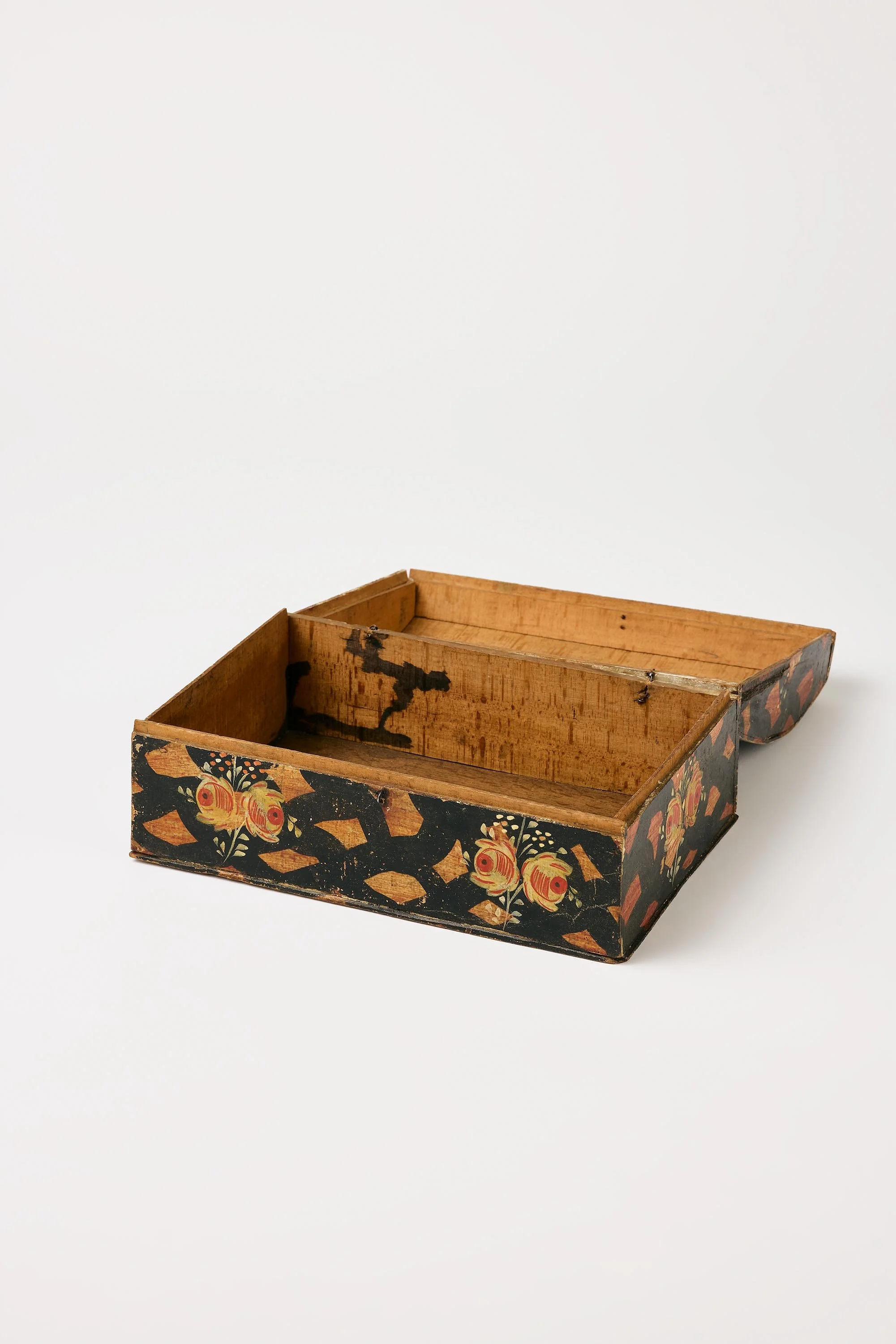 Image 2 of 3
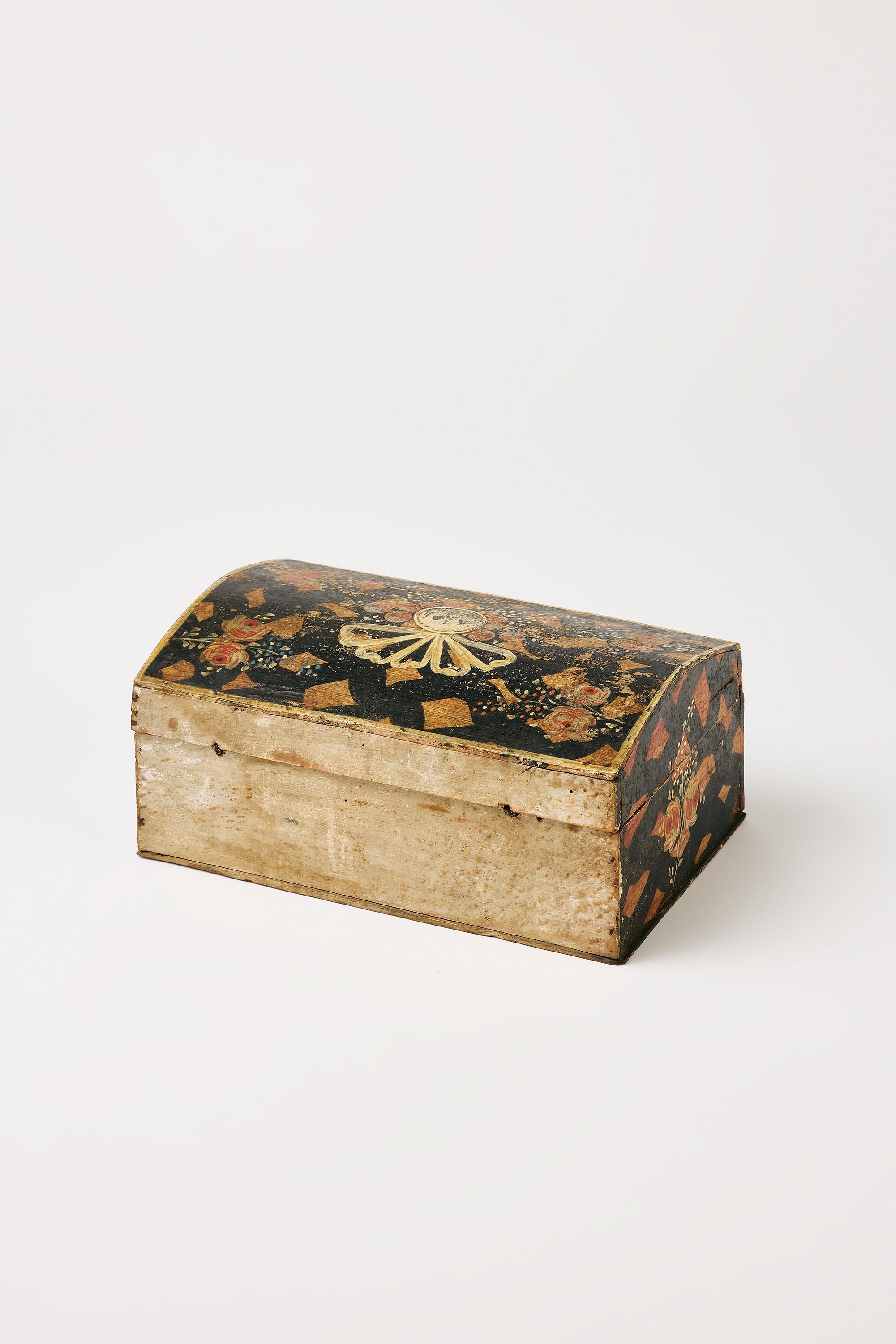 Image 3 of 3
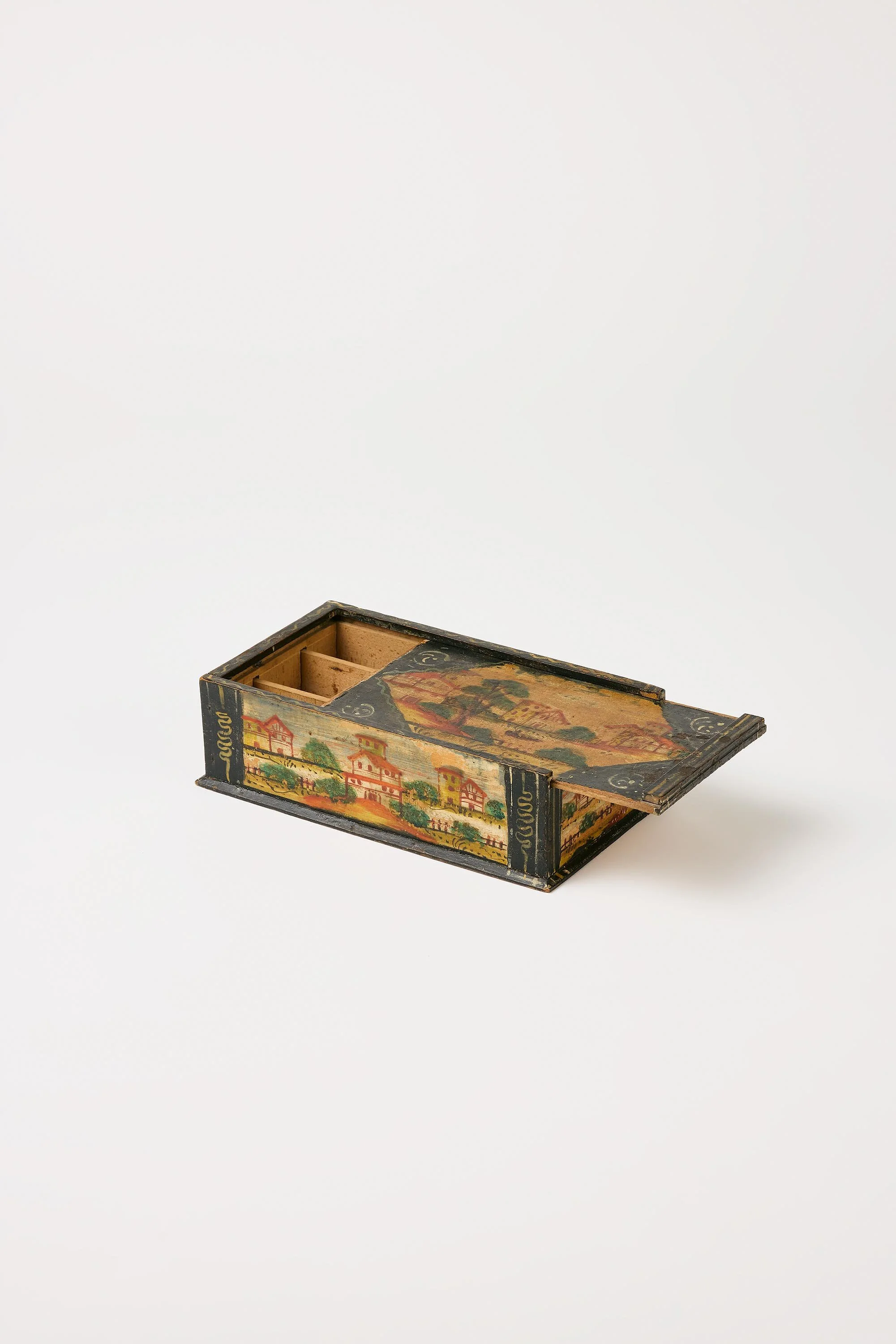
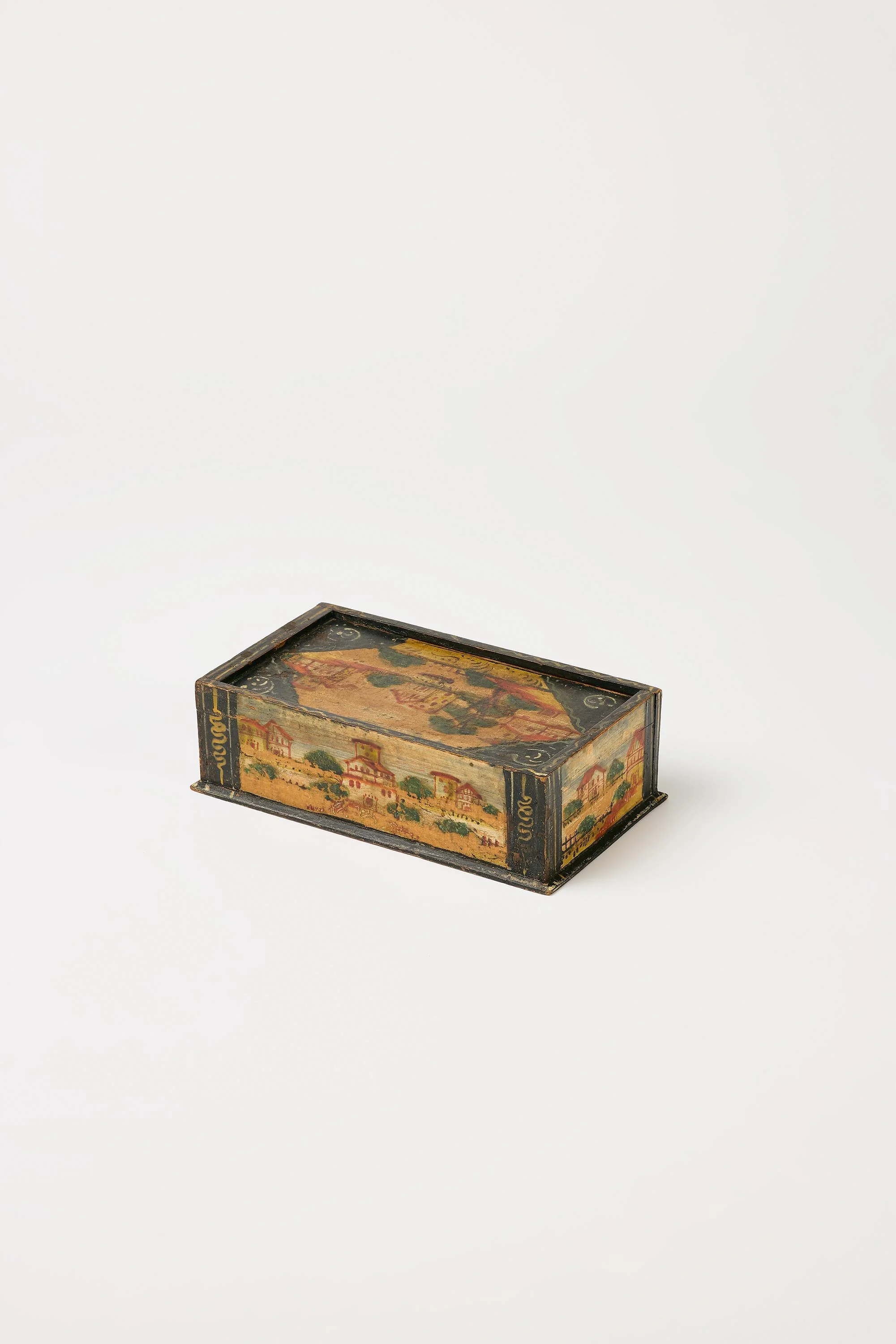
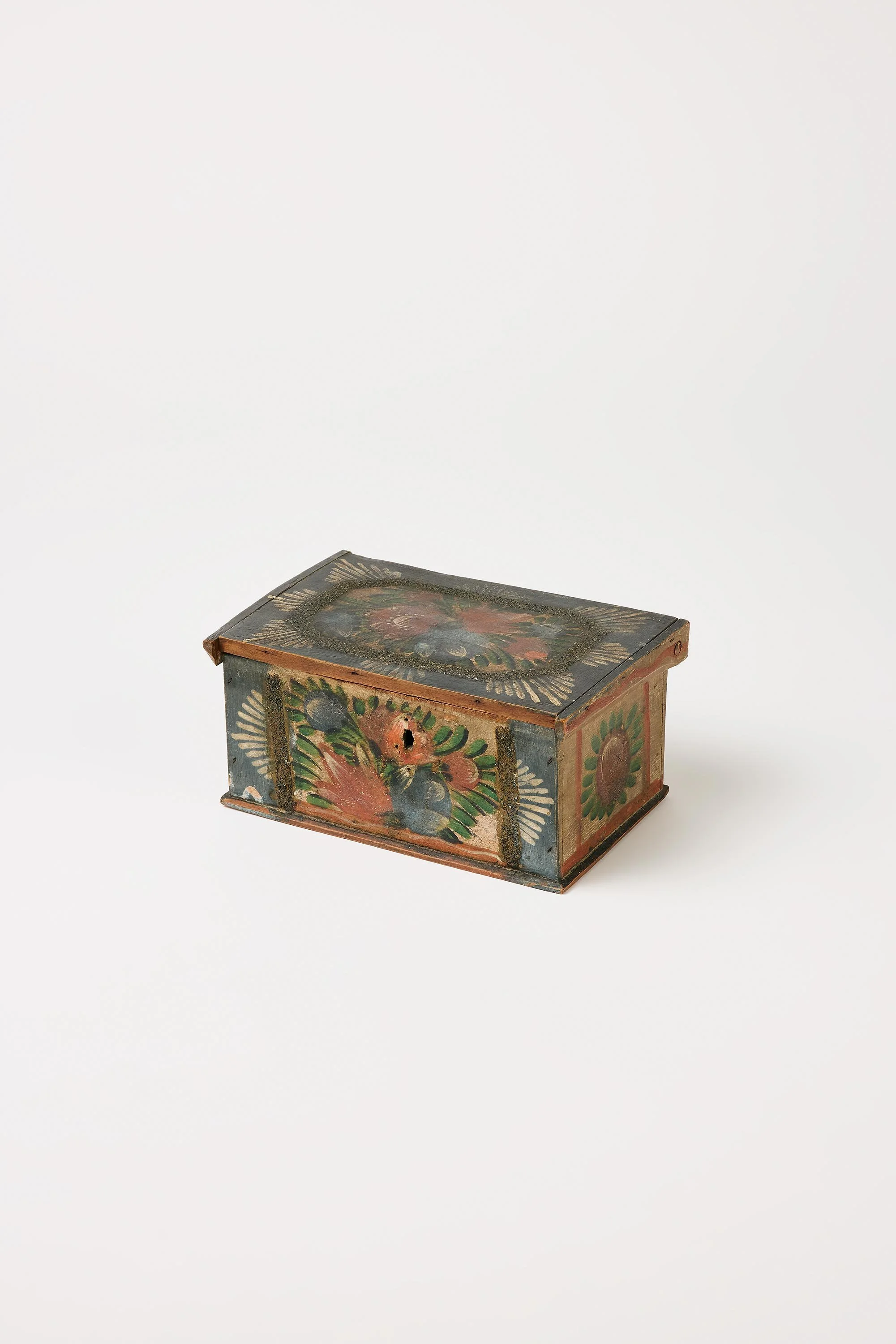
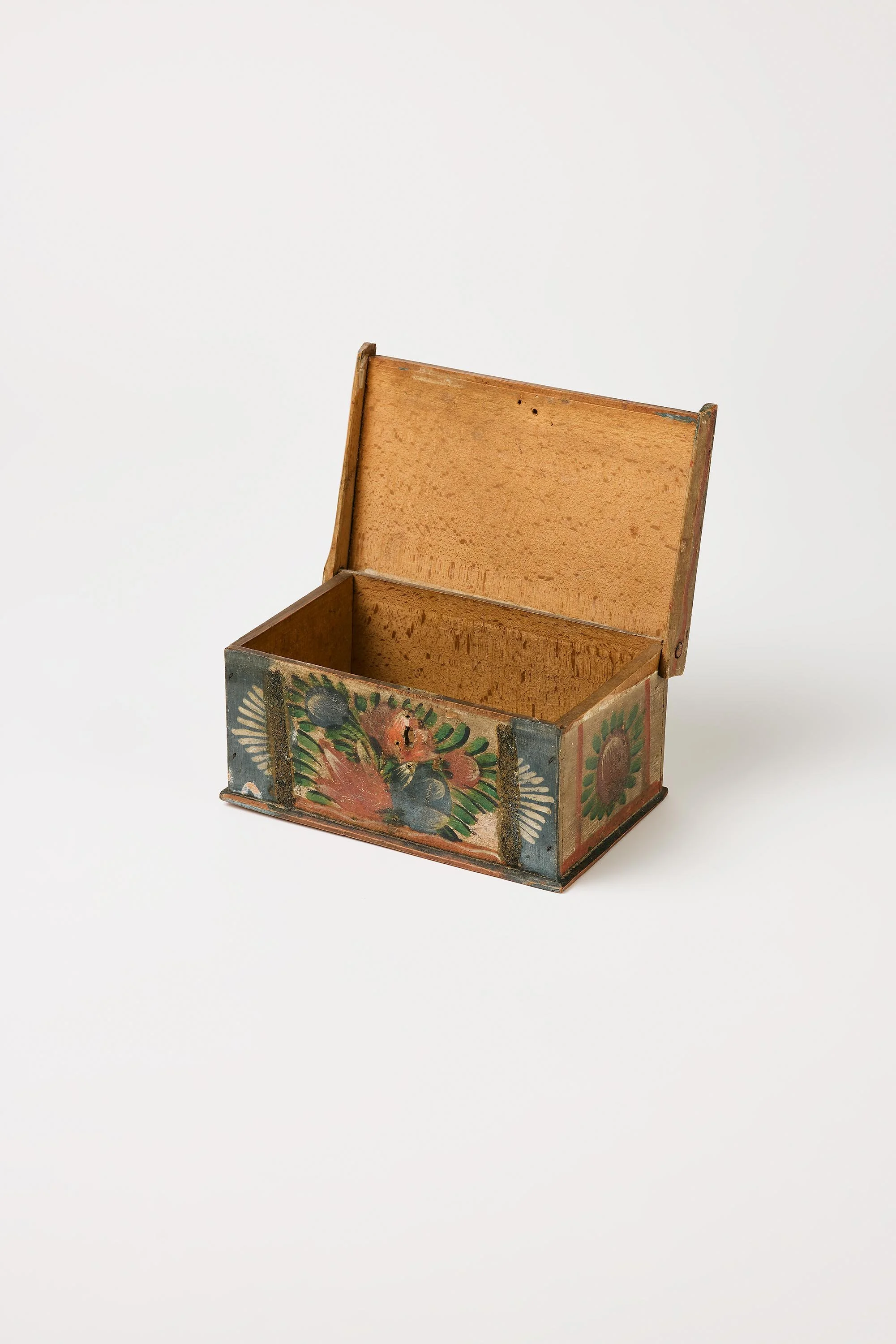
“Bauernmalerei”, late 18th or early 19th. century
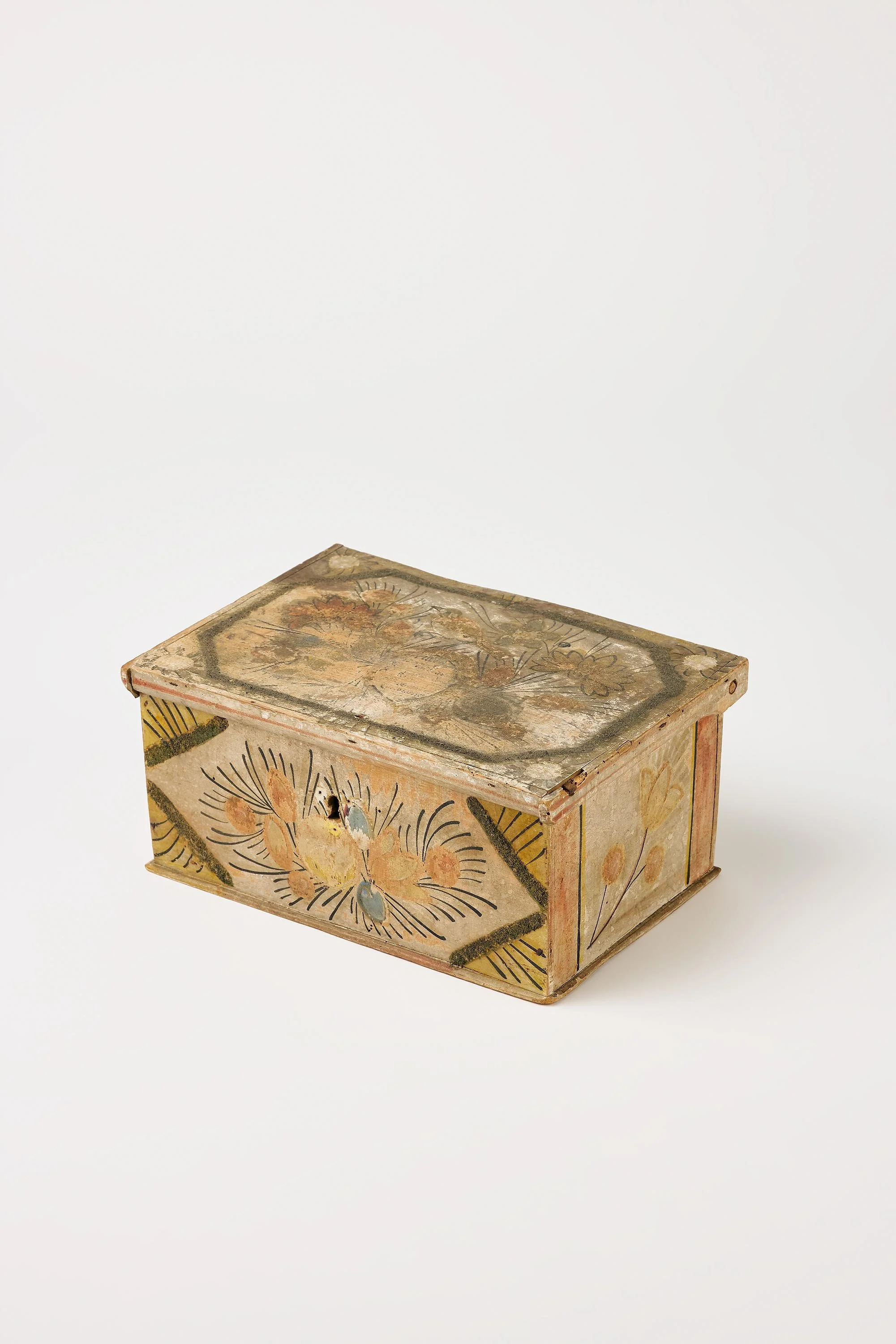
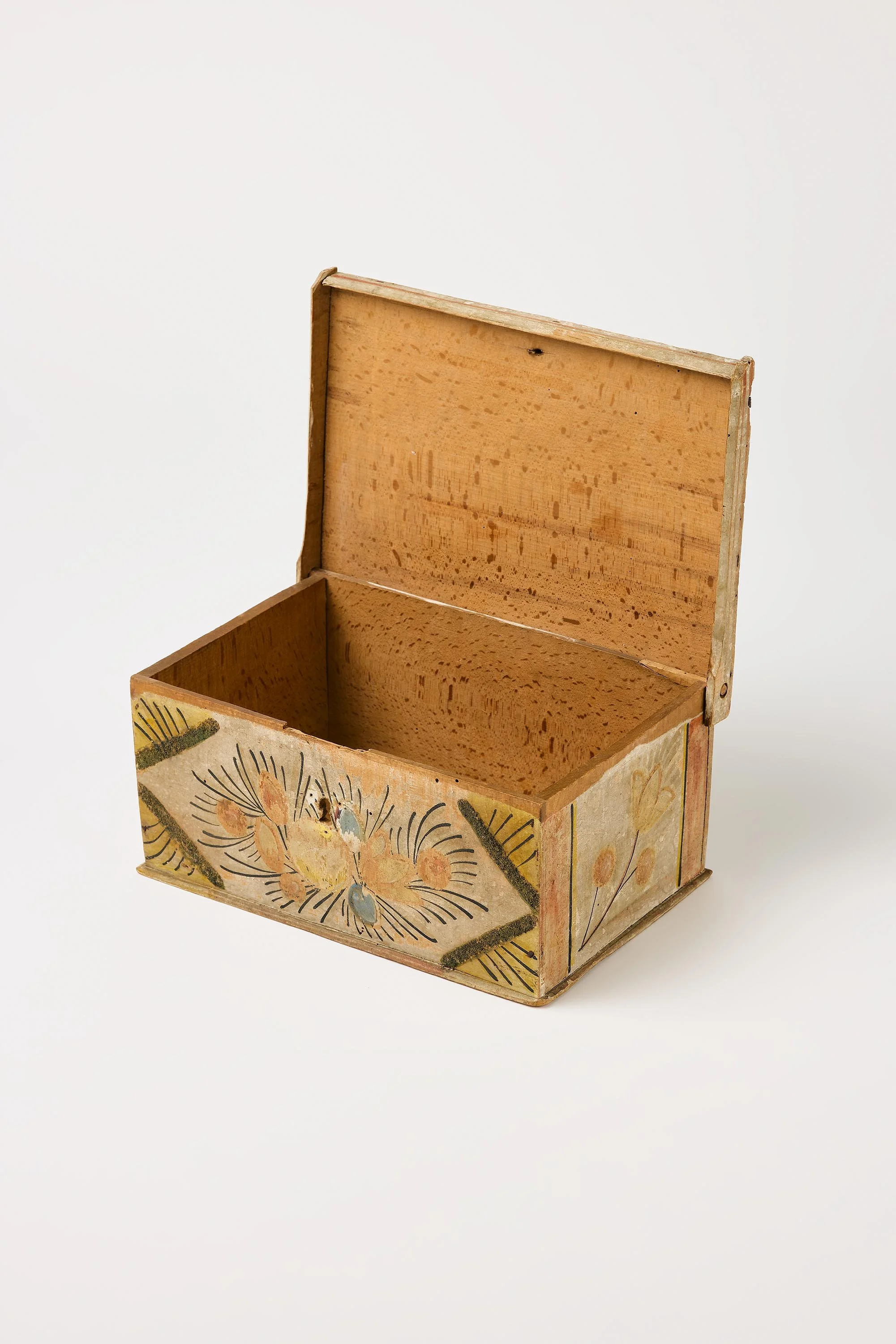
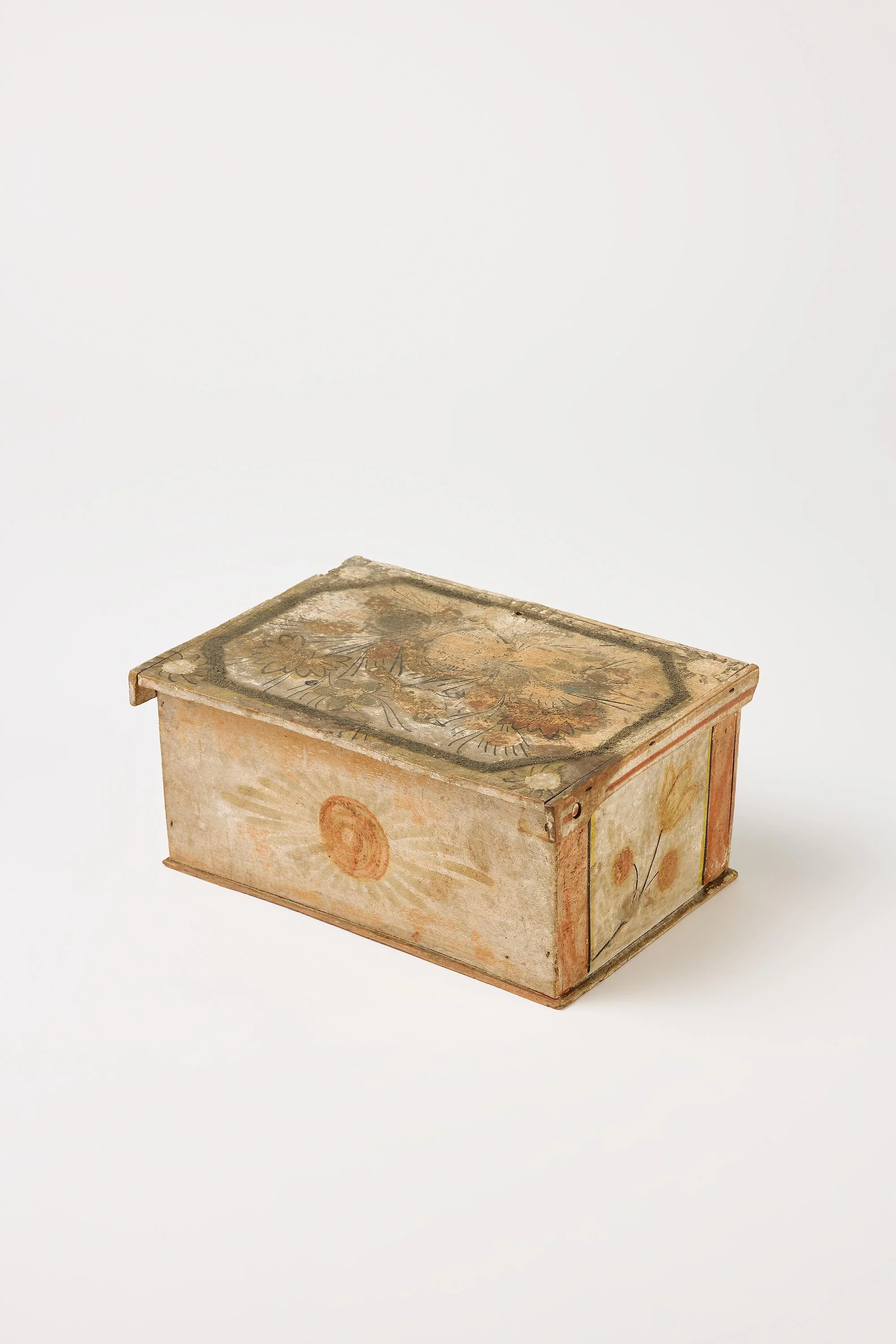
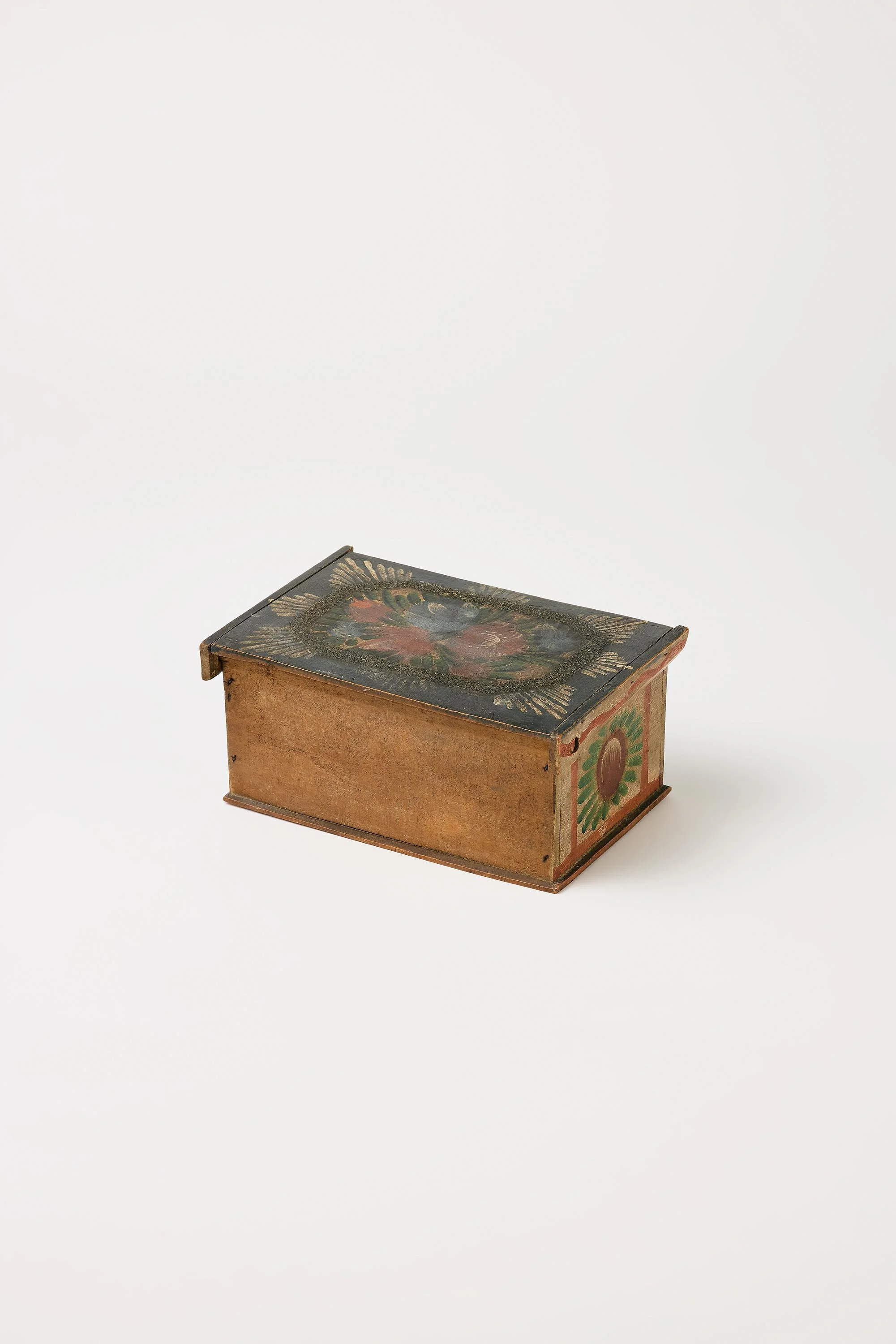
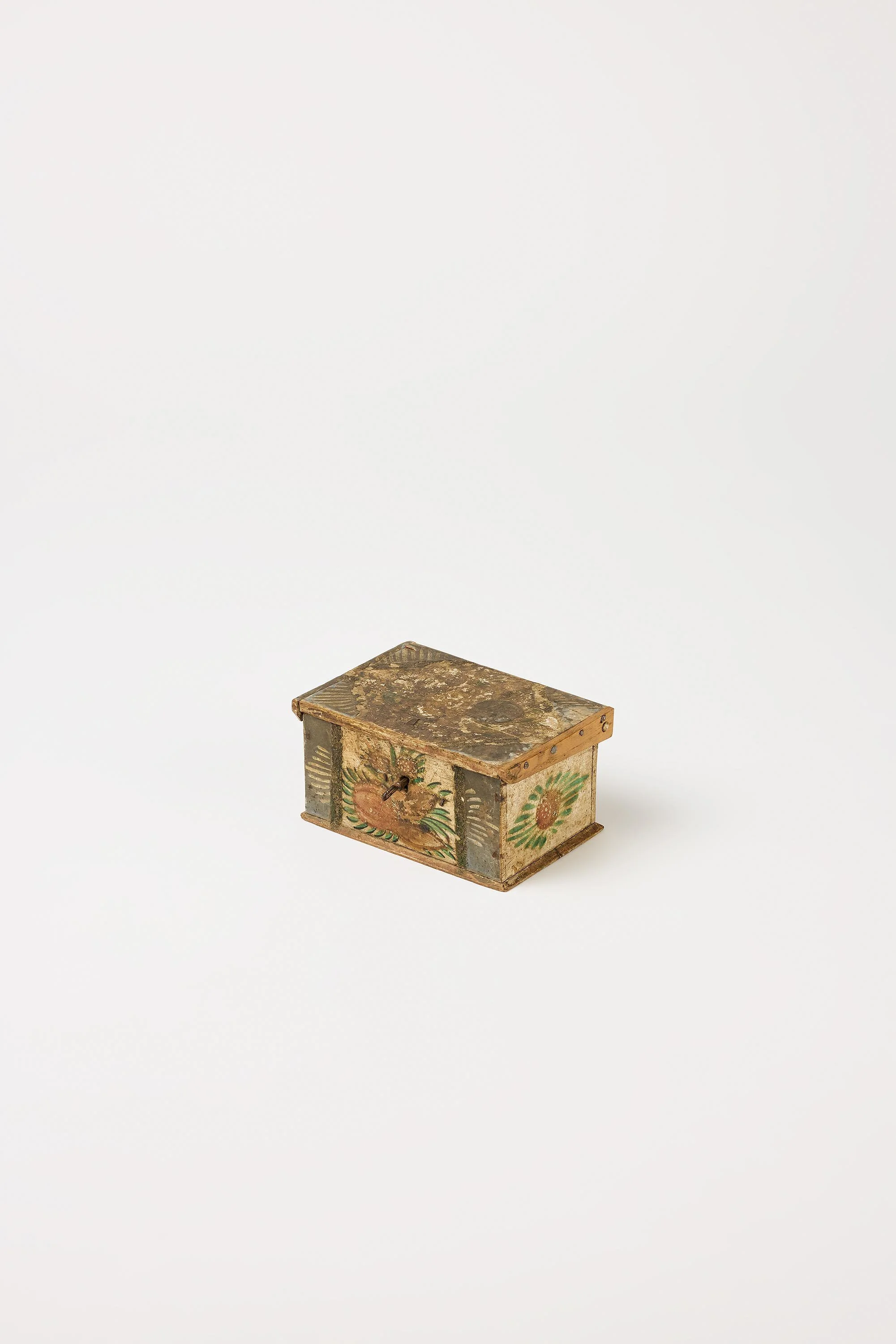
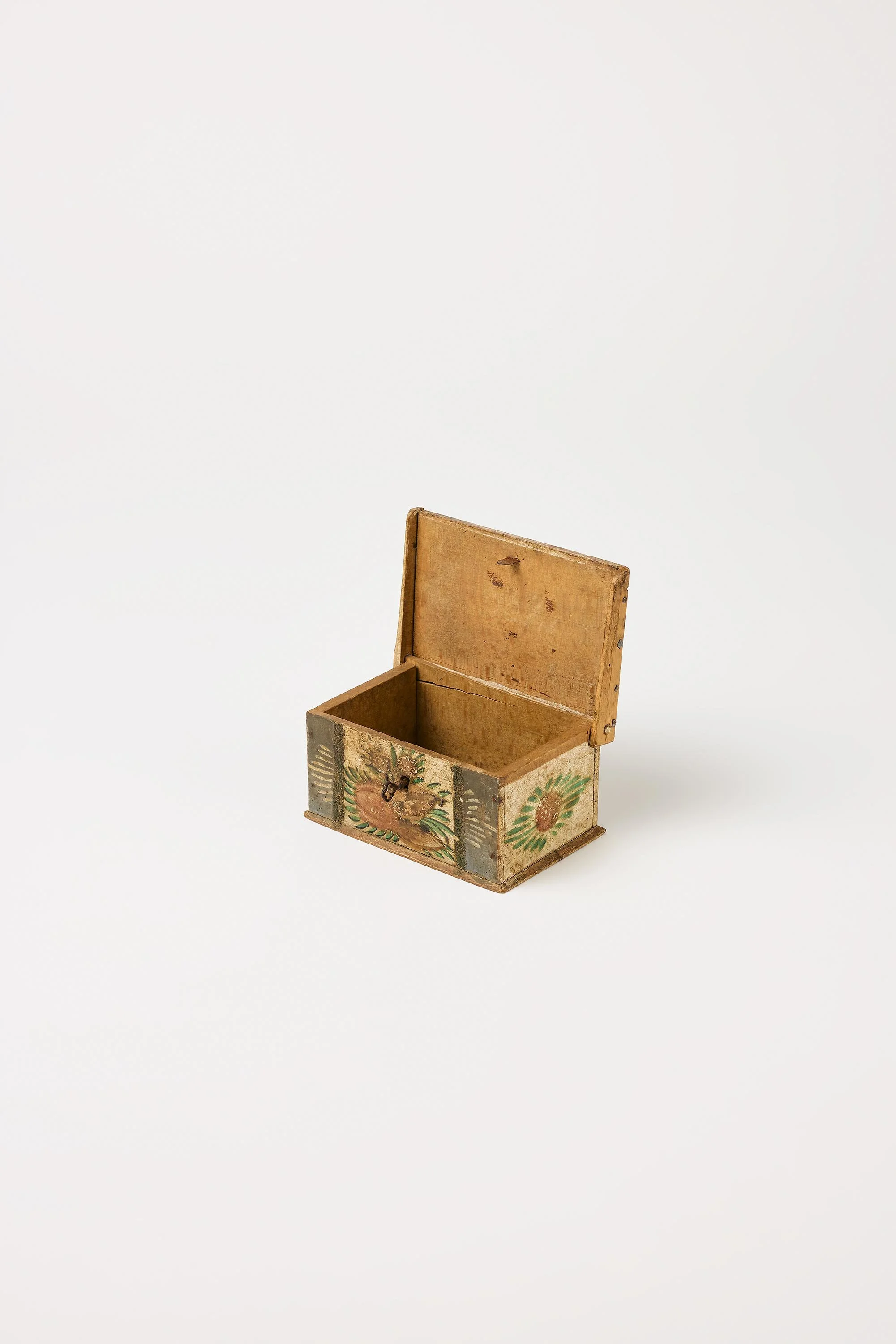
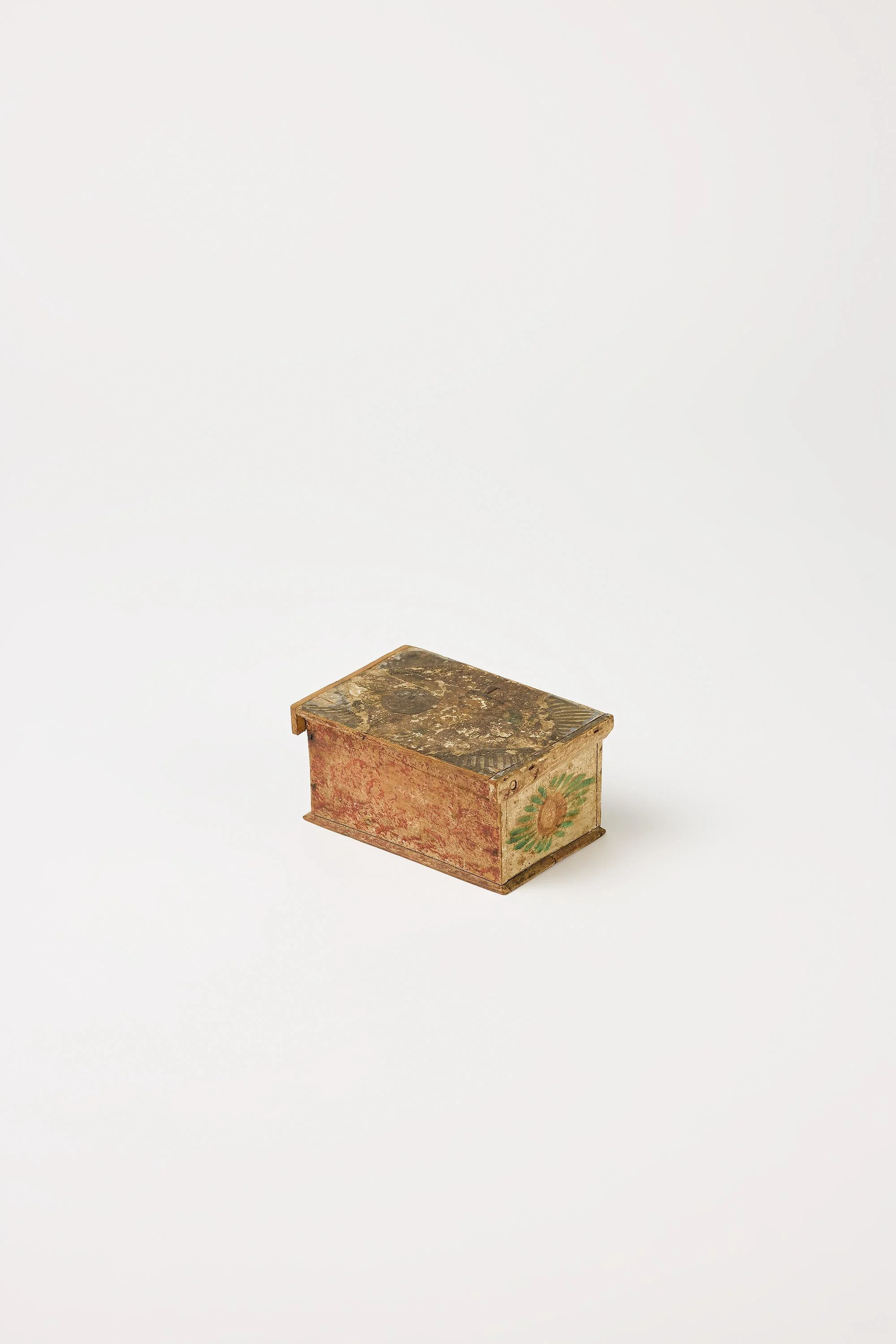
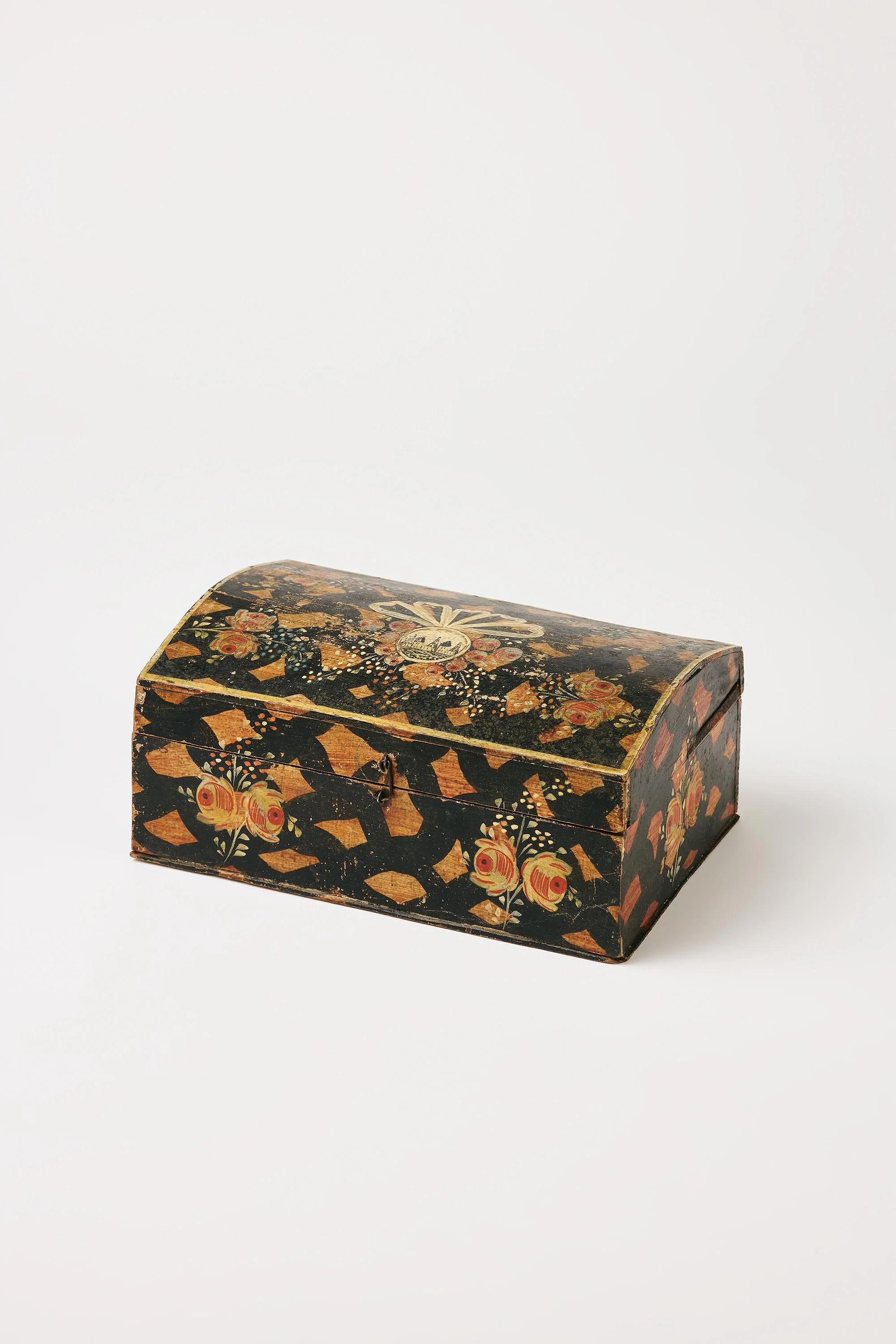
Handpainted wooden jewelry box with domed lid and wire-loop clasp.
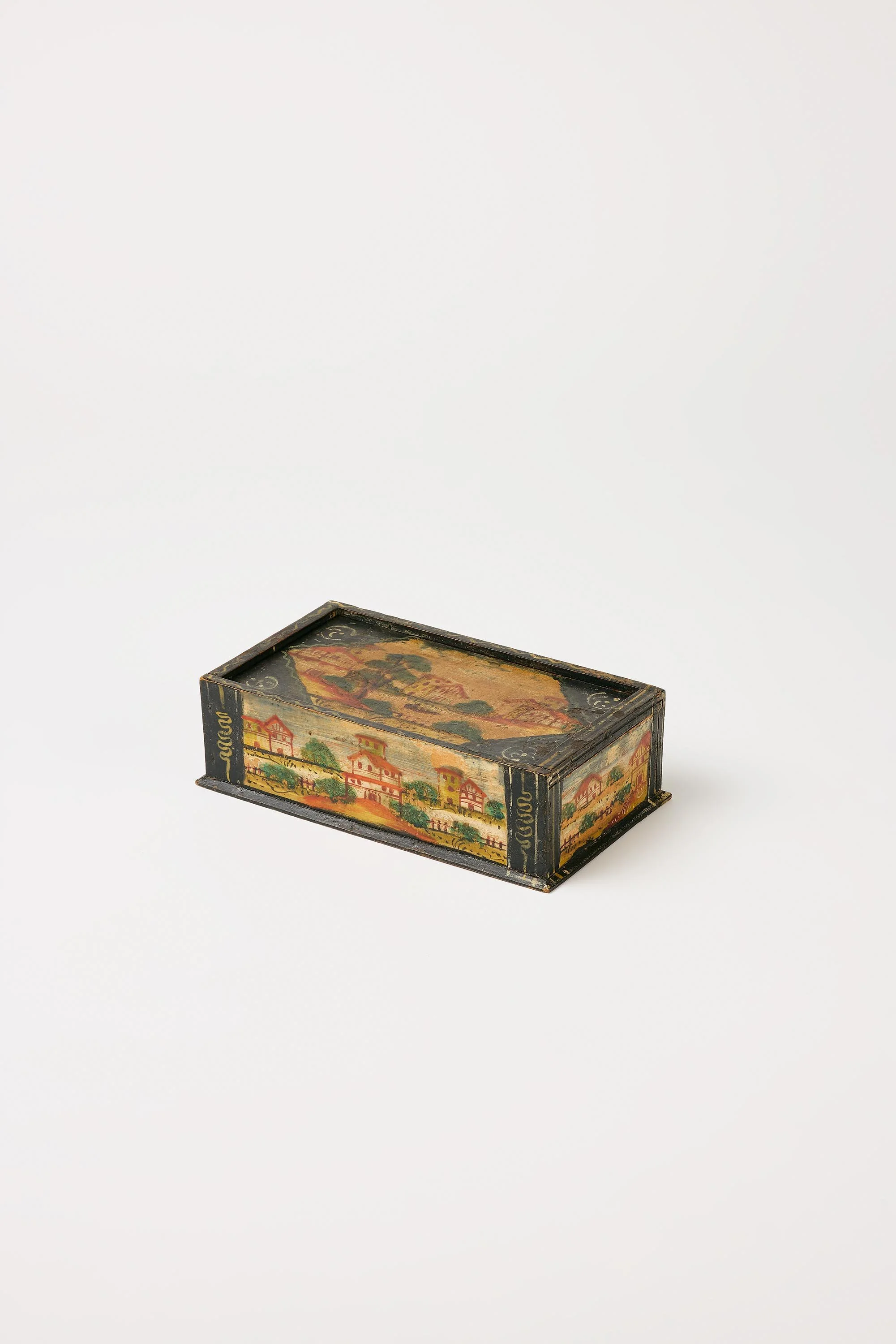
Rickly decorated with unusual stencil painting of dark colors. Depiction of pairs of roses on sides. The lid shows a combination of stencil ornament, flowers, lacing and a almost stamp like illustration of a city.
Pine wood, laquered, hand painted
29.5 × 17.5 × 14cm
Condition: antique with visible traces of use, left back wire hinge is lose.
About Bauernmalerei:
Peasant furniture painting can be found from around the second half of the 18th and especially the 19th century in rural areas of Southern Germany, northern Switzerland and Alsace.
Initially painted imitations of furniture richly decorated with carvings and exotic veneers as owned by aristocracy and clergy, its increasingly opulent canon of forms soon ranged from stylised flowers and fruit to ornaments, rocailles and by the 18th century to figures and scenic images. With industrialization and bourgeois salon culture finding its way around Europe, hand painted furniture quickly fell out of fashion for being peasant and has almost completely vanished at the end of the 19th century.
Typical items were so called bridal caskets or cupboards for brides to store their dowry, but also entire bed chambers and: smaller jewelry cases where the lady of the house kept her precious personal items such as jewelry, a bible or love letters.
“Bauernmalerei”, late 18th or early 19th. century
Handpainted wooden jewelry box with domed lid and wire-loop clasp.
Rickly decorated with unusual stencil painting of dark colors. Depiction of pairs of roses on sides. The lid shows a combination of stencil ornament, flowers, lacing and a almost stamp like illustration of a city.
Pine wood, laquered, hand painted
29.5 × 17.5 × 14cm
Condition: antique with visible traces of use, left back wire hinge is lose.
About Bauernmalerei:
Peasant furniture painting can be found from around the second half of the 18th and especially the 19th century in rural areas of Southern Germany, northern Switzerland and Alsace.
Initially painted imitations of furniture richly decorated with carvings and exotic veneers as owned by aristocracy and clergy, its increasingly opulent canon of forms soon ranged from stylised flowers and fruit to ornaments, rocailles and by the 18th century to figures and scenic images. With industrialization and bourgeois salon culture finding its way around Europe, hand painted furniture quickly fell out of fashion for being peasant and has almost completely vanished at the end of the 19th century.
Typical items were so called bridal caskets or cupboards for brides to store their dowry, but also entire bed chambers and: smaller jewelry cases where the lady of the house kept her precious personal items such as jewelry, a bible or love letters.